The Butter Packaging Revolution: Why Resealable Packaging Is Changing How We Store Butter
By: admin | March 30, 2026
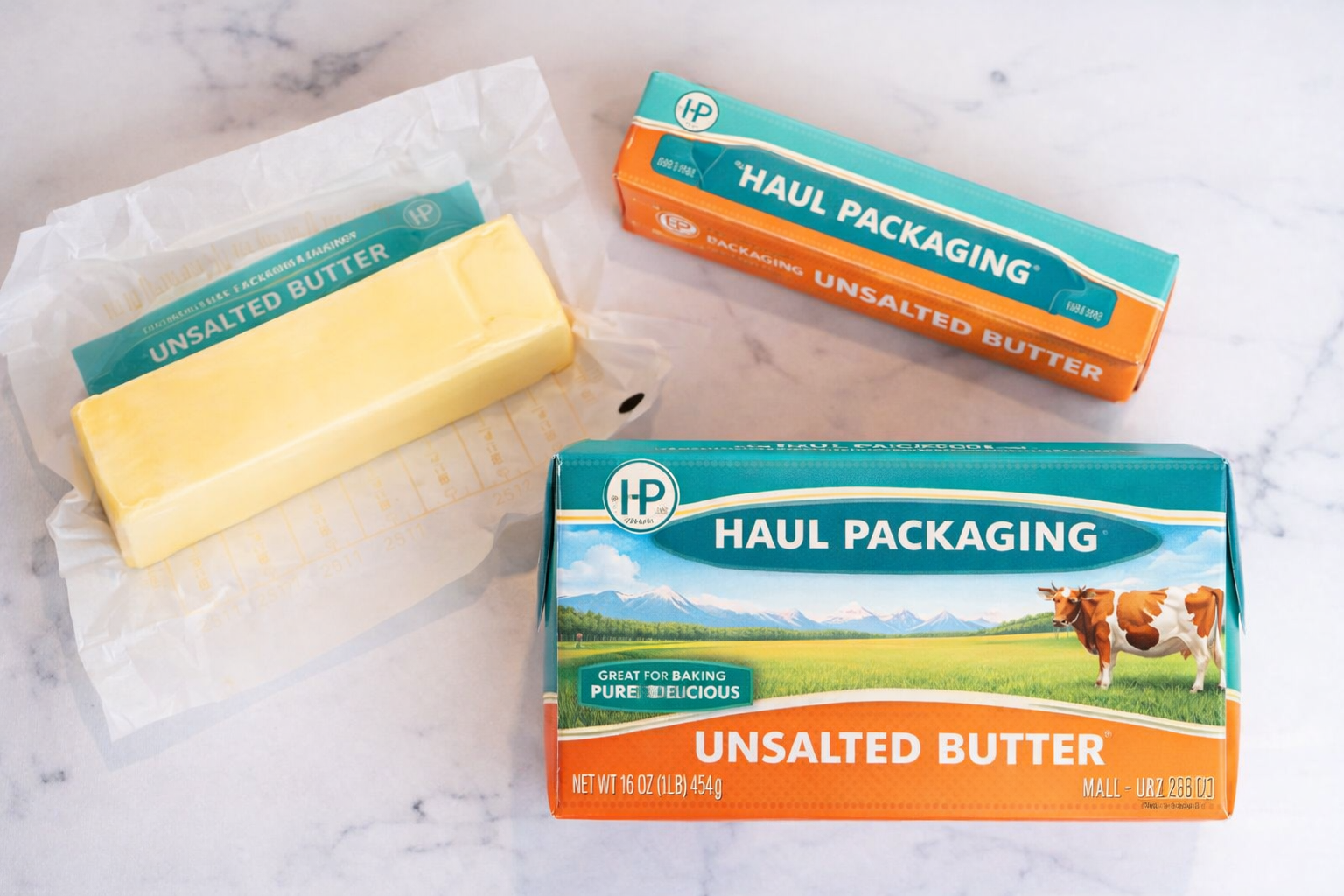
For generations, butter came in one of two forms: a foil-wrapped block or a rigid tub with a snap-on lid. You either unwrapped the entire stick, exposing it to air and odors, or you scooped from a tub that gradually lost its seal over time. But a revolution is underway.
In the past two years, the Butter Packaging landscape has transformed dramatically. Consumers are demanding more and manufacturers are responding with innovative resealable formats that address long-standing frustrations: oil separation, portability, portion control, and freshness preservation . The global butter packaging market, valued at over $152 billion in 2024, is projected to reach $242 billion by 2033, driven in large part by demand for convenient, user-friendly formats .
From the rise of spouted squeeze pouches to tubs designed for e-commerce, this guide explores how resealable packaging is changing the way we store, use, and think about butter.
The Problem with Traditional Butter Packaging
Understanding why resealable packaging has gained such traction requires examining the limitations of traditional formats.
The Oil Separation Challenge
Natural butter contains no stabilizers. This means oil separation is inherent to the product especially for natural and organic varieties. As Tamara Coleman, founder of Bark Bistro, explained when developing resealable packaging for Buddy Butter: “All natural can be messy. Natural oil separation happens” .
In a traditional jar or wrapped stick, this separation meant one thing: stirring. And stirring typically has limited use on at-home occasions. For consumers wanting to use butter on the go for training treats, quick spreads, or precise portioning the traditional format created friction .
Exposure and Freshness Issues
Traditional foil-wrapped butter blocks, while effective at preservation before opening, lose their protective barrier once unwrapped. The exposed surface is vulnerable to:
- Air exposure, leading to oxidation and flavor degradation
- Absorption of refrigerator odors
- Physical damage from handling
- Inconsistent portioning
Even traditional tubs, with their snap-on lids, gradually lose seal integrity over time as plastic warps or lids are misplaced.
Portion Control Limitations
For many consumers, the standard stick or block format doesn’t align with how they actually use butter. Research shows that consumers value portion control as a key benefit of packaged dairy products—with 36% of consumers citing ease of portioning as a top advantage of packaged dairy . Traditional formats often force consumers to either use too much or waste the remainder.
The Resealable Revolution: New Formats Changing the Game
The past two years have seen remarkable innovation in butter packaging formats. These solutions address the specific pain points of traditional packaging while adding new functionality.
The Spouted Squeeze Pouch
Perhaps the most dramatic innovation in butter packaging is the spouted squeeze pouch. Bark Bistro’s experience with its Buddy Butter product illustrates the transformative power of this format.
The Journey from Jar to Pouch:
- Original format: 17-oz rigid PET jar
- Growth trajectory: Four years to sell nearly one million jars
- New format: 4-oz resealable spouted pouch
- Result: Over one million pouches sold in a little over a year—with no formula change
Why the Pouch Worked:
- Resealability: The screw cap closure allows incremental dispensing—perfect for training, enrichment, or pill masking
- Portability: Fits in pockets, purses, and travel bags
- Oil management: The pouch allows kneading before opening to incorporate separated oils
- Multi-use behavior: Customers use it on walks, during travel, at veterinary visits—not just at home
The pouch structure uses a three-layer laminate: an outer PET layer for printing, a middle nylon layer for oxygen barrier and puncture resistance, and an inner polyethylene layer for heat-seal performance .
Resealable Tubs for the E-Commerce Era
Traditional butter tubs are being reimagined for the modern shopping experience. As e-commerce grocery platforms grow, the need for delivery-friendly packaging has intensified. According to market research, the online retail segment is expected to witness the fastest growth in butter packaging distribution channels through 2032 .
Innovations in Tub Design :
- Foil-sealed, resealable tubs: Lurpak introduced a foil-sealed, resealable tub optimized for online retail that reduces leakage and ensures freshness during shipping
- Tamper-evident features: Critical for direct-to-consumer shipments
- Insulated cartons: For multi-pack deliveries requiring temperature control
Mono-Material and Recyclable Wraps
Traditional butter wraps are often made from paper-aluminum laminates that cannot be recycled because the layers cannot be separated . The dairy sector is among the top three categories where most work remains to make packaging recyclable .
The Innovation: Boni Bio Ghee clarified butter became the first to offer a recyclable alternative to traditional paper laminate, a wrap made entirely of PE film . This represents a European first and a model for the industry.
Lurpak’s Commitment: The brand is working to switch mini portions to polypropylene (PP) material by 2026, moving toward recycled PP (rPP) when available, while collaborating with industry partners to develop more sustainable solutions for foil packaging .
Portion-Controlled and Single-Serve Packs
The demand for portion-controlled butter packs is surging across multiple sectors :
| Sector |
Application |
Format Preference |
| Hotels & Airlines |
Meal service |
Single-serve sealed portions |
| Quick-Service Restaurants |
Condiment service |
Easy-open, tamper-evident packs |
| Households |
Portion control |
Small tubs, multi-packs |
| Meal Kit Services |
Recipe inclusion |
Pre-measured, labeled portions |
Why This Matters: Health-conscious consumers are embracing smaller butter portions to manage calorie intake without compromising on taste. The organic & plant-based butter segment, which often uses premium portion-controlled packaging, is projected to record the fastest CAGR of 5.23% through 2033 .
Consumer Behavior and the Demand for Convenience
The shift toward resealable packaging is driven by fundamental changes in how consumers interact with dairy products.
What Consumers Value Most
A recent consumer survey across six European countries revealed clear priorities for packaged dairy products :
| Attribute |
Percentage Citing as Advantage |
| Resealability |
48% |
| Hygiene |
42% |
| Longer shelf life |
41% |
| Ease of portioning |
36% |
| Recyclability |
34% |
Key Insight: Resealability ranks highest among consumer priorities for packaged dairy even above hygiene and shelf life . This finding underscores why resealable formats are gaining such rapid adoption.
How Resealable Packaging Changed Usage Behavior
The Buddy Butter case study demonstrates how format influences consumption patterns. Coleman noted that customers now buy multiple SKUs and flavors at once—behavior that didn’t occur with the jar format .
Behavioral Shifts:
- From occasional to routine use: The product became “a tool at the end of the day that is part of our customer’s daily routine”
- From single to multi-purchase: Customers now buy multiple flavors and formats in single transactions
- From at-home to on-the-go: Use expanded to training, walks, travel, and veterinary visits
The Portion Control Trend
Health-conscious consumers are increasingly concerned with portion management. Portion-controlled butter packs allow precise serving sizes without waste. This trend aligns with the broader shift toward smaller, more frequent meals and snack-based eating patterns .
Sustainability: The Other Half of the Revolution
Resealable packaging isn’t just about convenience—it’s increasingly about environmental responsibility. The global recyclable butter packaging market is projected to grow from $911 million in 2025 to $1.39 billion by 2032, at a CAGR of 6.4% .
The Problem with Traditional Laminates
Traditional butter packaging often uses multi-layer laminates combining paper, plastic, and aluminum. These structures are difficult or impossible to recycle because the layers cannot be separated . As Belgian businesses pledged to make all packaging recyclable by 2025, the dairy sector was identified as one of the three categories with the most work remaining .
Emerging Sustainable Solutions
| Solution |
Description |
Example |
| Mono-material PE wraps |
Recyclable plastic film without aluminum layer |
Boni Bio Ghee clarified butter |
| Recyclable PP tubs |
Polypropylene tubs designed for recycling systems |
Lurpak Spreadable tubs |
| FSC-certified paper wraps |
Paper-based wraps from responsibly managed forests |
Arla Foods, Amul |
| Recycled plastic (rPP) |
Post-consumer recycled polypropylene |
Lurpak’s upcoming transition |
The Packaging-as-Strategy Approach
For leading brands, packaging is no longer a functional detail—it’s a strategic touchpoint. As one industry report notes, packaging decisions now balance “quality protection, operational resilience, and sustainability priorities across the value chain” . This means:
- Design for recyclability: Specifying materials that work with existing recycling systems
- Right-sizing: Reducing material usage without compromising protection
- Consumer education: Clear labeling to ensure proper disposal
Market Growth and Future Outlook
The numbers tell a compelling story about the direction of butter packaging.
Market Size and Projections
| Metric |
Value |
| Global Butter Packaging Market (2024) |
USD 152.43 billion |
| Projected Market (2033) |
USD 242.21 billion |
| CAGR (2025–2033) |
5.41% |
| Recyclable Butter Packaging Market (2025) |
USD 911 million |
| Projected Recyclable Market (2032) |
USD 1.39 billion |
Regional Leadership
North America dominated the butter packaging market with a 38.5% revenue share in 2024, driven by high butter consumption and established dairy brands . The U.S. market alone represents over 80% of North American revenue, fueled by demand for flavored, grass-fed, and artisanal butter varieties .
Europe is expected to witness the fastest growth, supported by strong dairy consumption and environmental regulations promoting sustainable packaging . The region’s early adoption of recyclable formats positions it as a leader in packaging innovation.
What’s Next?
Industry leaders are already planning the next generation of butter packaging:
- Lurpak aims to transition mini portions to PP by 2026, with eventual move to recycled PP (rPP)
- Mono-material solutions are expanding as barrier technologies improve
- Fiber-based composites are gaining traction for tub-type packaging
- Digital printing enables short-run, customizable packaging for specialty butters
Frequently Asked Questions (FAQs)
Q1: What is the advantage of resealable butter packaging?
A: Resealable packaging allows incremental dispensing, prevents oil separation issues, extends freshness after opening, and enables on-the-go use. According to consumer surveys, 48% of consumers cite resealability as the greatest advantage of packaged dairy products .
Q2: Is resealable butter packaging recyclable?
A: It depends on the material. Mono-material PE and PP formats are widely recyclable. Traditional paper-aluminum laminates are not. Brands like Lurpak and Boni Bio are transitioning to fully recyclable mono-material solutions.
Q3: What is a spouted pouch for butter?
A: A spouted pouch is a flexible package with a screw cap closure that allows precise, mess-free dispensing. Bark Bistro’s Buddy Butter demonstrated that this format can accelerate sales dramatically—selling over one million units in a little over a year compared to four years for a jar format .
Q4: Why is oil separation a problem for butter packaging?
A: Natural butter contains no stabilizers, so oil separates naturally. Traditional jars required stirring, which limited use to at-home occasions. Resealable pouches allow kneading before opening to incorporate oils and enable on-the-go use .
Q5: What are the most popular butter packaging formats?
A: Foil/paper-wrapped blocks hold the largest market share (over 30%), followed by tubs, pouches, and portion-controlled packs. The fastest growth is in innovative formats like resealable pouches and tubs optimized for e-commerce.
Q6: How is e-commerce changing butter packaging?
A: Online grocery growth has increased demand for sturdy, tamper-evident, and delivery-friendly packaging. Brands like Lurpak have introduced foil-sealed, resealable tubs designed to reduce leakage and ensure freshness during shipping .
Q7: What sustainable innovations are coming for butter packaging?
A: Key innovations include mono-material PE wraps (replacing paper-aluminum laminates), recycled PP tubs, FSC-certified paper wraps, and fiber-based composites. The recyclable butter packaging market is projected to reach $1.39 billion by 2032.
Conclusion
The butter packaging revolution is well underway. What was once a simple foil wrapper or plastic tub has evolved into a sophisticated ecosystem of resealable pouches, recyclable mono-materials, and e-commerce-ready designs that address consumer demands for convenience, freshness, and sustainability .
The numbers tell the story: the global butter packaging market is projected to reach $242 billion by 2033, with the fastest growth in innovative formats like spouted pouches and recyclable mono-materials. And consumer preferences are clear—Resealability ranks as the top advantage of packaged dairy products, even above hygiene and shelf life .
For butter brands, the message is clear: packaging is no longer just a container. It’s a strategic tool that shapes usage behavior, builds brand loyalty, and communicates environmental values. The brands that embrace resealable, sustainable formats will be the ones that lead the market.
At Haul Packaging, we specialize in helping food and dairy brands across the USA create custom packaging that meets the demands of today’s consumers. From spouted pouches with advanced barrier properties to recyclable tubs designed for e-commerce, we have the expertise and low MOQs to support your brand’s packaging evolution.
Latest Posts