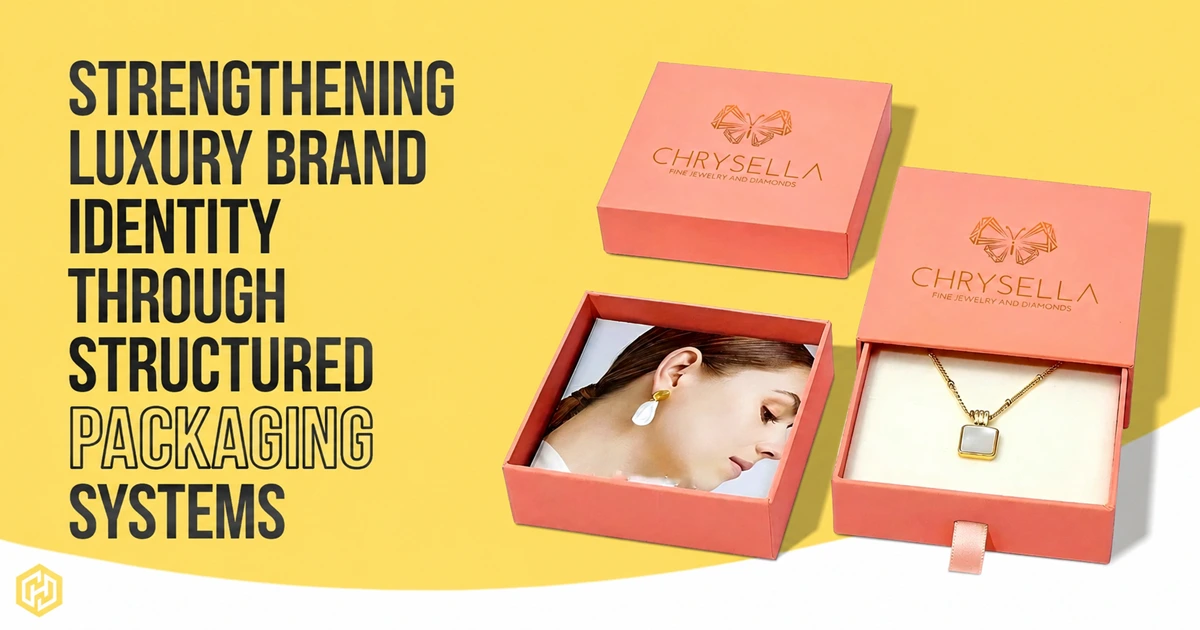
Strengthening Luxury Brand Identity Through Structured Packaging Systems
In the luxury accessories market, packaging is rarely treated as a secondary component. It operates as a physical extension of the brand’s positioning. The moment a customer interacts with a product’s exterior presentation, assumptions are formed about quality, credibility, and price alignment.
For jewelry businesses, this interaction carries even greater weight. Customers associate visual precision and tactile refinement with product value. When packaging fails to reflect that expectation, the entire brand experience weakens.
Packaging as a Psychological Trigger
Luxury purchasing decisions are influenced by perception as much as function. The firmness of a box, the smoothness of its surface, and the sound it makes when opened all contribute to emotional response.
Structured packaging creates anticipation. It signals intention and control. When customers open a carefully designed box, they interpret the experience as thoughtful and premium.
Brands using custom jewelry boxes gain the ability to control these micro-interactions. They decide how the product is revealed, how it is positioned, and how the customer experiences that moment.
These controlled experiences build brand memory.
Engineering Stability for High-Value Items
Jewelry items are small but often high in value. Damage during transport—even minor surface scratching can generate costly returns and reputational harm.
Standard packaging formats rarely account for the specific stability requirements of delicate accessories. Without proper inserts or support systems, movement occurs during transit.
Custom jewelry boxes allow for engineered interiors. Foam inserts, velvet linings, molded compartments, and structured supports hold items firmly in place. This stability reduces damage risk while reinforcing a premium interior appearance.
The structural design must protect without appearing overly industrial. Balance is critical.
Material Selection and Brand Hierarchy
Material communicates hierarchy. A thick rigid board implies durability. Textured finishes imply craftsmanship. Soft-touch coatings suggest refinement.
Brands positioned in higher price segments benefit from materials that reflect exclusivity. Conversely, minimalist or sustainable-focused brands may prefer natural finishes and understated printing.
Custom jewelry boxes provide flexibility in material selection while maintaining consistent structural integrity. This flexibility allows businesses to align packaging decisions directly with brand strategy.
When packaging materials match pricing tier and audience expectation, brand coherence improves.
Print Minimalism and Visual Authority
In luxury markets, restraint often outperforms complexity. Overcrowded designs dilute perception. Clean layouts with controlled typography project confidence.
Subtle logo placement, metallic foil accents, and embossed finishes enhance authority without overwhelming the customer. The objective is not to decorate the box but to reinforce the brand’s presence quietly.
Well-designed custom jewelry boxes often use minimal color palettes and strategic finishing techniques. This controlled approach creates a refined aesthetic that supports premium positioning.
Long-Term Brand Visibility
Jewelry packaging frequently remains with the customer long after purchase. Boxes are reused for storage, gifting, or safekeeping. This extended lifecycle increases brand exposure in private environments.
Unlike disposable packaging, well-constructed boxes continue representing the brand over time. Each reuse reinforces recognition.
This longevity transforms packaging from a short-term expense into a long-term branding asset.
Operational Planning and Production Efficiency
Premium packaging must also align with operational efficiency. Structural consistency simplifies inventory management and procurement planning.
When sizes are standardized across collections, production forecasting improves. Bulk manufacturing reduces per-unit costs. Storage planning becomes predictable.
Custom jewelry boxes designed within a structured system allow growth without repeated redesigns. Stability in packaging standards supports stability in operations.
Sustainability Expectations in Luxury Markets
Modern consumers expect environmental responsibility across all price segments. Sustainable materials and reduced waste practices are increasingly evaluated alongside design quality.
Luxury does not conflict with sustainability. Recyclable board materials, minimal plastic usage, and efficient printing methods allow brands to balance elegance with environmental awareness.
Packaging decisions should consider both visual impact and ecological responsibility.
Strategic Perspective
In competitive jewelry markets, packaging shapes perception before the product is worn. It communicates quality, protection, and professionalism simultaneously.
Brands that integrate structural engineering, material alignment, and visual restraint into their packaging systems build stronger credibility and long-term customer trust.
Custom jewelry boxes, when designed strategically, become more than containers. They function as instruments of brand authority, protection systems for valuable items, and silent marketing tools that extend beyond the initial sale.