Is Parchment Paper Safe for Oven Baking? Temperature Limits and Safety Tips
Quick answer: Yes, you can put parchment paper in the oven, provided it’s oven safe and you stay within the temperature limit as specified by the manufacturer. A lot of the standard parchment paper you’ll find is rated up to 425°F (218°C), and some of the specialist baking sheets can go up to 450°F (232°C). Just don’t put it in direct contact with the heating element, an open flame, or a broiler.
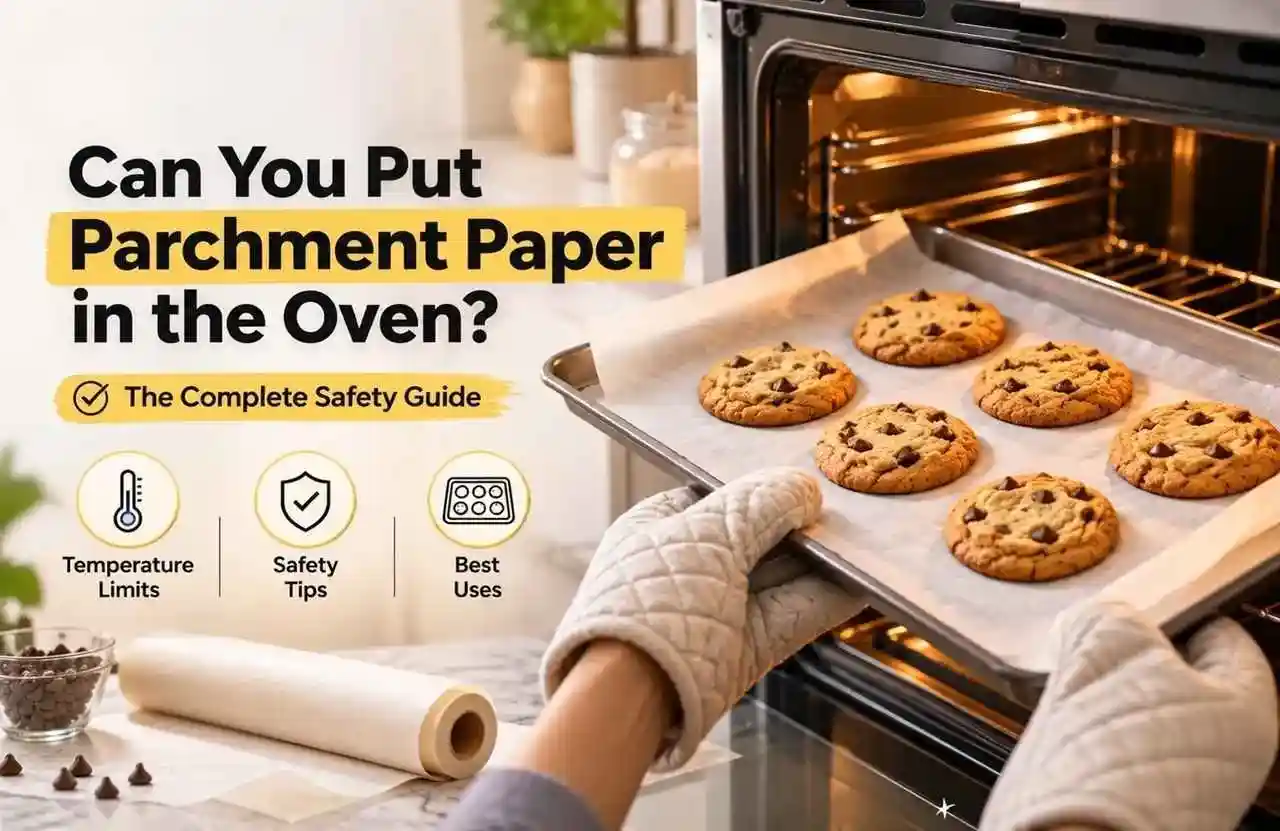
If you’re wondering if you can put parchment paper in the oven, you’re not alone. Whether you’re baking chocolate chip cookies, roasting vegetables, or preparing homemade pizza, parchment paper can make cooking easier and cleanup faster.
However, understanding how you can put parchment paper in the oven safely requires more than checking the oven temperature. You also need to know how parchment behaves under heat, how to position it correctly, and when another baking surface is a better choice.
What makes parchment paper safe for baking?
Parchment paper is a specially made grease-resistant paper, normally treated with food-safe silicone to give it a non-stick surface.
Baking parchment differs from normal writing paper because it withstands the temperatures used in many normal cooking situations.
- Easy food release: Helps prevent cookies, brownies, and pastries from sticking.
- Less cleanup: Reduces baked-on residue on trays and pans.
- Convenient baking: Makes it easier to transfer certain baked goods after cooling.
- Reduced need for grease: Many recipes require little or no additional oil on parchment.
- Versatile applications: Suitable for many baking, roasting, and steaming methods.
Parchment paper is not fireproof. Its heat resistance will vary from manufacturer to manufacturer, and if you place it in the wrong place, it can actually be a fire hazard.
Understanding Temperature Limits
The temp that’s printed on your parchment packaging is the key safety guide.
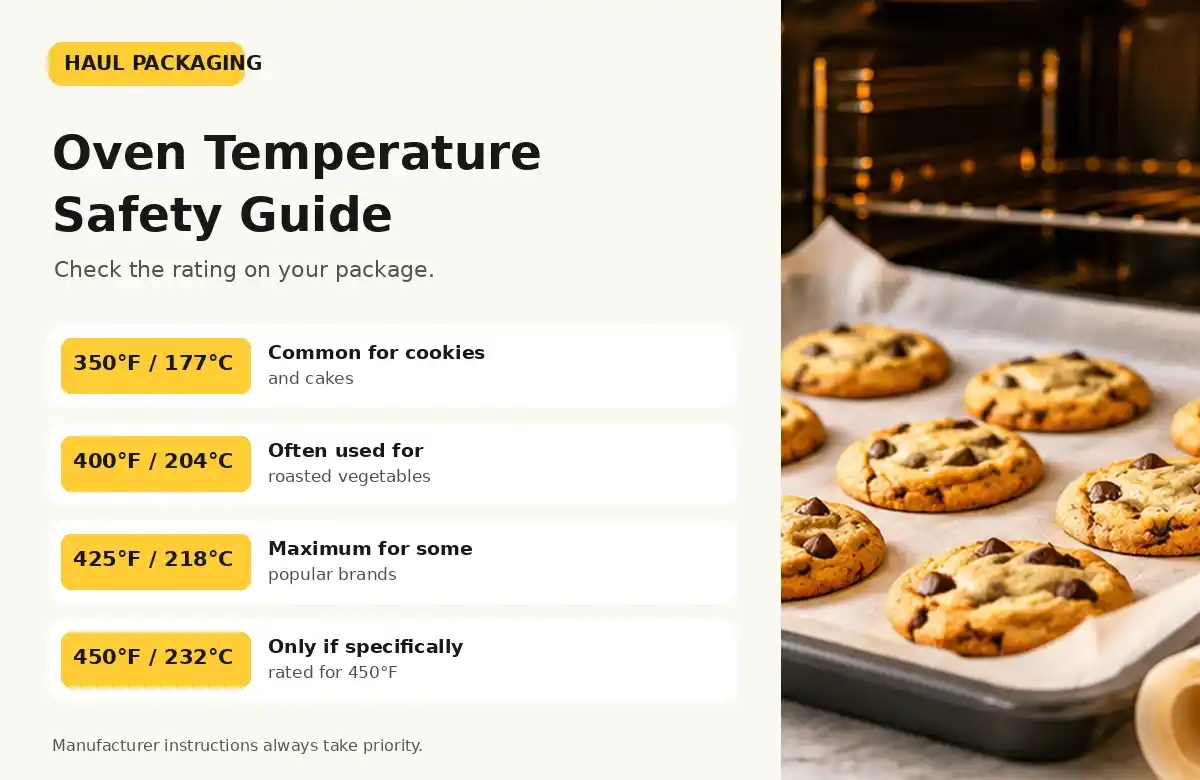
These differences mean that there is no single ‘safe’ maximum temperature that applies to every product.
Oven Temperature Reference Chart
| Temperature | Parchment Paper Guidance |
| 300°F (149°C) | Suitable for parchment rated above this temperature |
| 350°F (177°C) | Common for cookies, cakes, and brownies |
| 375°F (191°C) | Suitable for many pastries and baked desserts |
| 400°F (204°C) | Often used for vegetables and sheet-pan meals |
| 425°F (218°C) | Maximum rating for some popular brands |
| 450°F (232°C) | Only for parchment explicitly rated to at least 450°F |
| 475°F (246°C) | Above many standard product ratings |
| 500°F (260°C) | Avoid ordinary parchment unless specifically approved. |
Can You Bake at 350°F?
Yes, parchment rated for at least 350°F is excellent for most standard baking recipes.
Is 400°F safe?
Normally yes, provided the parchment is rated at 400°F or above.
Lots of sheet pan recipes, including roasted vegetables and some fish dishes, use this temperature.
What about 425°F and 450°F?
At 425°F some of the parchment are already at their stated max temp.
At 450°F, you must use a product that is approved for that temperature.
Why 500°F Is Different
These temperatures are well beyond the limits of many ordinary parchment products.
Even if the parchment doesn’t actually catch fire straight away, going above its rating will still result in scorching, brittleness, and deterioration.
How to Use Parchment Paper Correctly
Correct positioning is just as important as temperature.
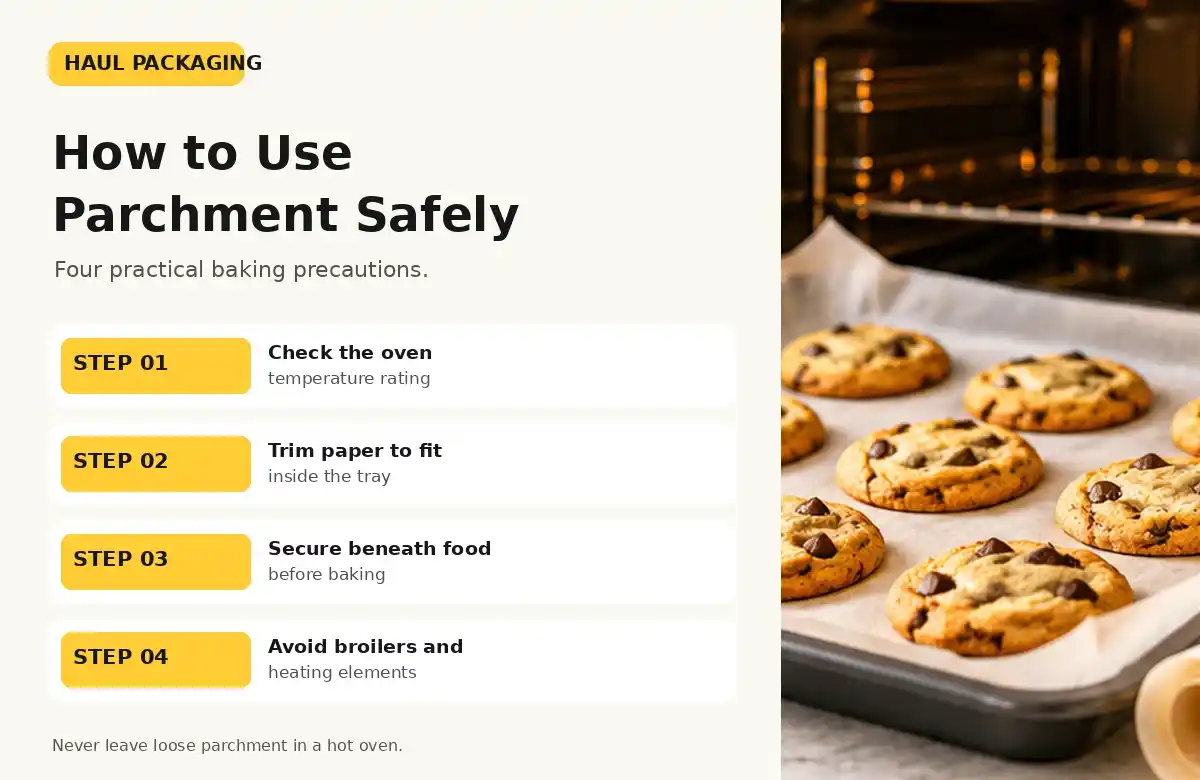
Step 1: Read the Manufacturer’s Instructions
Step 2: Preheat Your Oven
Step 3: Trim the Paper
Step 4: Add Food Before Baking
Just arrange the ingredients on the parchment lined tray before putting it into the oven.
Step 5: Keep It Away From Heating Elements
Step 6: Inspect After Baking
Just allow the tray to cool before you go near the paper.
Throw away any parchment that is torn, heavily scorched, brittle, or contaminated with burnt food.
Best Foods to Bake and Roast With Parchment
Chocolate Chip Cookies
Cookies are probably the most common use of parchment paper.
It also cuts down on the amount of cleanup after baking.
For home-based cookie businesses, production does not end when cookies leave the oven. Once completely cooled, baked cookies can be arranged in suitable food-safe packaging. Businesses selling cookies may explore custom cookie boxes to improve product protection and retail presentation.
Cakes, Brownies, and Pastries
For rectangular pans, a fitted parchment sling will allow you to lift the cooled brownies without any damage to the edges.
Commercial bakeries handling different desserts may also benefit from appropriately sized custom bakery boxes for packing and presenting finished products.
Roasted Vegetables
Vegetables such as carrots, broccoli, cauliflower, and potatoes can be roasted on parchment provided the recipe temp is within the paper’s rating.
Spread the veg out in a single layer to ensure more even cooking.
Chicken and Fish
Parchment paper is useful for certain chicken and fish recipes that are prepared at approved temperatures.
One of the more popular methods of cooking is en papillote, which is simply cooking the food in a packet of parchment paper to retain the steam and moisture.
Bread and Pizza
If you’re asking, can you use parchment paper in the oven for pizza or your own homemade bread? Then check the recipe.
Some recipes call for temperatures in excess of 450°F.
Can parchment paper catch fire?
A sheet can scorch, smoke, or catch fire if it comes into contact with an exposed heating element, is in contact with a flame, or is exposed to inappropriate temperatures.
- Exceeding the manufacturer’s heat rating.
- Using parchment directly under a broiler.
- Placing it against heating elements.
- Leaving loose paper inside an empty oven.
- Allowing exposed corners to curl upward.
- Reusing badly damaged or greasy parchment.
Why does parchment turn brown?
Parchment can tend to go a bit dark during the baking process, particularly near the upper end of the temperature range.
Mild discoloration is not in itself an indication of an active fire. Excessive browning, smoke, brittleness, or a burning smell, however, can be an indicator of unsafe conditions.
What should you do if it starts smoking?
Switch the oven off when it’s safe to do so and don’t handle any smoking or burning paper.
If a fire does develop, keep the oven door shut, turn off the heat if it’s safe to do so, and follow the normal kitchen fire procedures.
Can You Use Parchment in Different Oven Types?
Conventional Oven
Conventional ovens are fine for parchment paper provided you’re within the temperature ratings of the paper.
Convection Oven
However, circulating air can blow loose paper toward the heating elements.
Toaster Oven
Don’t assume that regular parchment is safe to use in a toaster oven.
Certain manufacturers (Reynolds Kitchens, for instance) will specifically advise against the use of their parchment products in a toaster oven.
Broiler
Broilers give out a very intense amount of direct radiant heat and can cause paper to scorch or even catch fire.
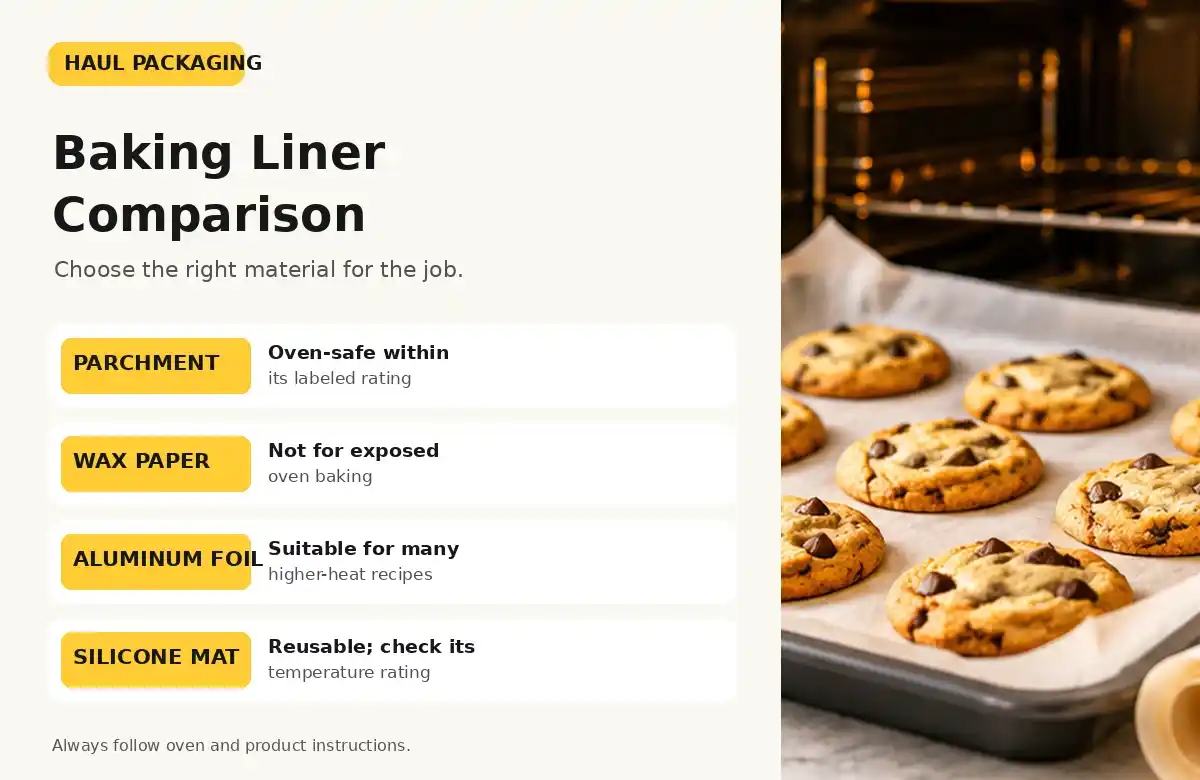
Parchment Paper vs. Wax Paper vs. Aluminum Foil
Understanding the differences is the only way to avoid accidental misuse.
| Feature | Parchment Paper | Wax Paper | Aluminum Foil |
| Standard oven baking | Yes, within rating. | Not for exposed baking | Generally yes. |
| Nonstick surface | Usually | Yes, at room temperature | Depends on coating |
| Cookies and brownies | Excellent | Not recommended for exposed baking | Suitable for some recipes |
| Broiling | No | No | Often suitable with precautions |
| High-temperature roasting | Rating-dependent | No | Generally suitable |
| Wrapping cooled foods | Yes | Yes | Yes |
Why Wax Paper Is Not a Direct Substitute
The coating can melt, and the paper itself may burn.
When should you use aluminum foil?
Aluminum foil might be a better option for recipes that require a temperature above the parchment’s rating.
Common Mistakes Home Bakers Should Avoid
Exceeding Its Rated Temperature
Leaving Long Paper Edges Exposed
Using an Unsupported Sheet
Reusing Scorched Paper
Assuming Every Brand Is the Same
Both white and brown parchment can be oven safe, but their appearance doesn’t dictate the maximum temperature.
What can you use instead?
- Aluminum foil: Appropriate for many higher-temperature cooking applications.
- Silicone baking mats: Reusable, but subject to their own maximum temperature limits.
- Greased baking pans: Useful for cakes, cookies, and other dishes depending on the recipe.
- Pizza stones: Designed for many high-heat pizza-baking applications.
- Baking steels: Often used for high-temperature bread and pizza.
- Unlined metal trays: Suitable for numerous roasting applications.
Baking Paper and Food Packaging: Why They Serve Different Purposes
Baking parchment and food packaging paper are often confused with one another, but they aren’t necessarily the same thing.
Oven safe parchment is for specific oven temperatures. Many food wraps and boxes are for food handling, storage, and takeaway.
For example, restaurants and bakeries can choose among different food packaging solutions based on product size, grease resistance, moisture levels, and delivery requirements.
Businesses selling cakes, cookies, or pastries can also explore suitable bakery packaging options for finished products.
However, grease resistance or suitability for food contact in itself doesn’t mean that a paper or cardboard packaging product is safe to use in an oven.
Frequently Asked Questions
Can You Use Parchment Paper at 350°F?
Can you put parchment paper in the oven at 450°F?
Can Parchment Paper Go Directly on an Oven Rack?
How long can parchment stay in the oven?
Can You Reuse Parchment Paper?
Is Brown Parchment Paper Better Than White?
Can You Put Parchment Paper Under Frozen Pizza?
Is Parchment Paper Safe for an Air Fryer?
Can Parchment Paper Burn at 400°F?
Do You Need to Grease Parchment Paper?
Most silicone-coated baking parchment already has a nonstick surface. However, some recipes may still call for greasing the pan or another preparation step.
Is It Safe for Everyday Baking?
So, can you put parchment paper in the oven? Absolutely, provided you use genuine oven-safe parchment within its stated temperature limit and follow the manufacturer’s handling instructions.
For everyday baking, parchment is a convenient choice for cookies, cakes, brownies, pastries, and many roasted foods.
The key is understanding that parchment paper is heat-resistant, not fireproof. High-temperature recipes, broilers, and certain compact ovens may require a different cooking surface.
Always check the packaging, trim exposed paper edges, and keep parchment away from heating elements.
With proper precautions, parchment paper can make baking cleaner, easier, and more convenient.
This article is based on manufacturer guidance and published cooking resources. It does not replace instructions supplied with your oven or parchment product.