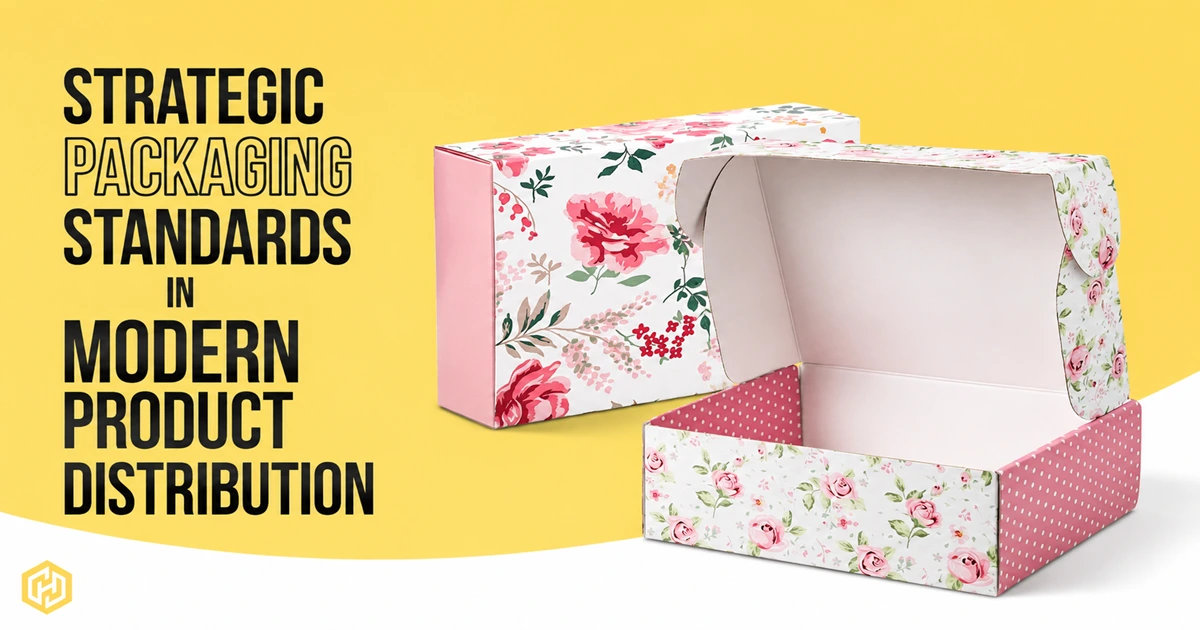
Strategic Packaging Standards in Modern Product Distribution
In today’s distribution-driven economy, packaging is no longer treated as a secondary operational detail. It has become a structured component of logistics, branding, compliance, and customer satisfaction. Businesses that scale successfully often do so because their systems are aligned, and packaging is a major part of that alignment.
From warehouse handling to last-mile delivery, the packaging format a company chooses influences efficiency, safety, and perception. For product-based businesses, especially those shipping nationally or internationally, structure and consistency matter more than decorative appeal.
This is where custom cardboard boxes support not just branding, but operational performance.
Packaging as Infrastructure, Not Decoration
Many early-stage brands choose packaging based primarily on cost or availability. As order volume increases, weaknesses begin to surface. Boxes collapse under stacking pressure. Products shift during transit. Warehousing becomes inefficient because sizes are inconsistent.
Well-designed cardboard packaging acts as infrastructure. It creates predictable dimensions for stacking, labeling, and shipping calculations. When boxes are standardized according to product specifications, distribution becomes smoother and more cost-controlled.
Custom cardboard boxes help eliminate excess void space, reducing the need for fillers and lowering dimensional weight charges. This operational benefit directly impacts shipping expenses over time.
Logistics Efficiency and Dimensional Accuracy
Shipping carriers calculate fees based on both weight and volume. Oversized packaging increases costs even if the product inside is lightweight. Using precisely measured cardboard packaging prevents unnecessary dimensional weight charges.
This precision becomes increasingly important for eCommerce brands competing on margin. Optimized packaging improves storage efficiency, palletizing, and container loading.
Over hundreds or thousands of shipments, these incremental savings compound significantly.
Structural Integrity and Product Protection
Transport environments are unpredictable. Packages are stacked, shifted, and exposed to pressure. Structural integrity is essential to maintain product quality and minimize returns.
Cardboard remains a preferred packaging material because it offers strength-to-weight balance. It can be reinforced in pressure points without making the box excessively heavy. Custom designs allow businesses to choose board grades appropriate for their product weight and fragility.
This reduces breakage rates and customer complaints, both of which affect brand reputation and profitability.
Consistency Across Sales Channels
Modern brands often sell across multiple platforms: direct-to-consumer websites, marketplaces, wholesalers, and retail stores. Packaging consistency across these channels reinforces professional standards.
When customers receive products packaged uniformly,y regardless of where they purchased them, the brand experience remains stable. This consistency signals reliability.
Custom cardboard boxes allow companies to maintain standardized specifications across different distribution models while adapting labeling or printing as needed.
Sustainability and Compliance Considerations
Environmental awareness has shifted from optional to expected. Retail partners, marketplaces, and even customers increasingly evaluate brands based on sustainable packaging practices.
Cardboard is widely accepted as recyclable and environmentally responsible when sourced correctly. Custom sizing reduces waste, which further strengthens sustainability positioning.
For businesses working with retailers or corporate buyers, compliance with packaging standards and environmental expectations is not just beneficial; it is often mandatory.
Inventory Management and Scalability
As businesses expand, inventory control becomes more complex. Nonstandard packaging complicates storage and tracking. Varying box sizes create inefficiencies in shelving and picking processes.
Standardized cardboard packaging simplifies forecasting, storage planning, and reordering cycles. When packaging dimensions remain consistent, operations teams can optimize warehouse layout more effectively.
Custom cardboard boxes support scalability because they are designed with growth in mind, not short-term convenience.
Brand Perception Through Operational Excellence
Customers may not consciously analyze packaging specifications, but they recognize professionalism. A well-structured box that arrives intact, opens cleanly, and presents the product securely reinforces brand credibility.
In contrast, dented or unstable packaging can create doubt even if the product remains undamaged. Perception often shapes customer loyalty as much as product performance.
Professional packaging communicates that a business operates with systems, standards, and long-term planning.
Cost Control Through Design Efficiency
Packaging design directly influences material consumption, shipping costs, and damage rates. Optimized design reduces excess board usage without sacrificing protection.
Instead of using oversized generic boxes, companies benefit from designing packaging around their products. This precision reduces waste and avoids unnecessary inserts or padding.
Over time, efficient packaging decisions contribute to healthier profit margins and more predictable operational costs.
The Long-Term Strategic View
Businesses that treat packaging as a strategic asset tend to experience smoother growth. Packaging touches logistics, finance, marketing, and customer experience at the same time—decisions made at this level ripple across the organization.
Custom cardboard boxes support this broader strategy by aligning product dimensions, shipping methods, sustainability goals, and brand presentation into one consistent system.
Final Insight
Modern distribution requires structured thinking. Packaging must support operational efficiency, regulatory expectations, cost management, and customer perception all at once.
By implementing properly engineered cardboard packaging solutions, businesses create stability within their supply chain while reinforcing professional standards. Over time, this structured approach strengthens both operational performance and market credibility.