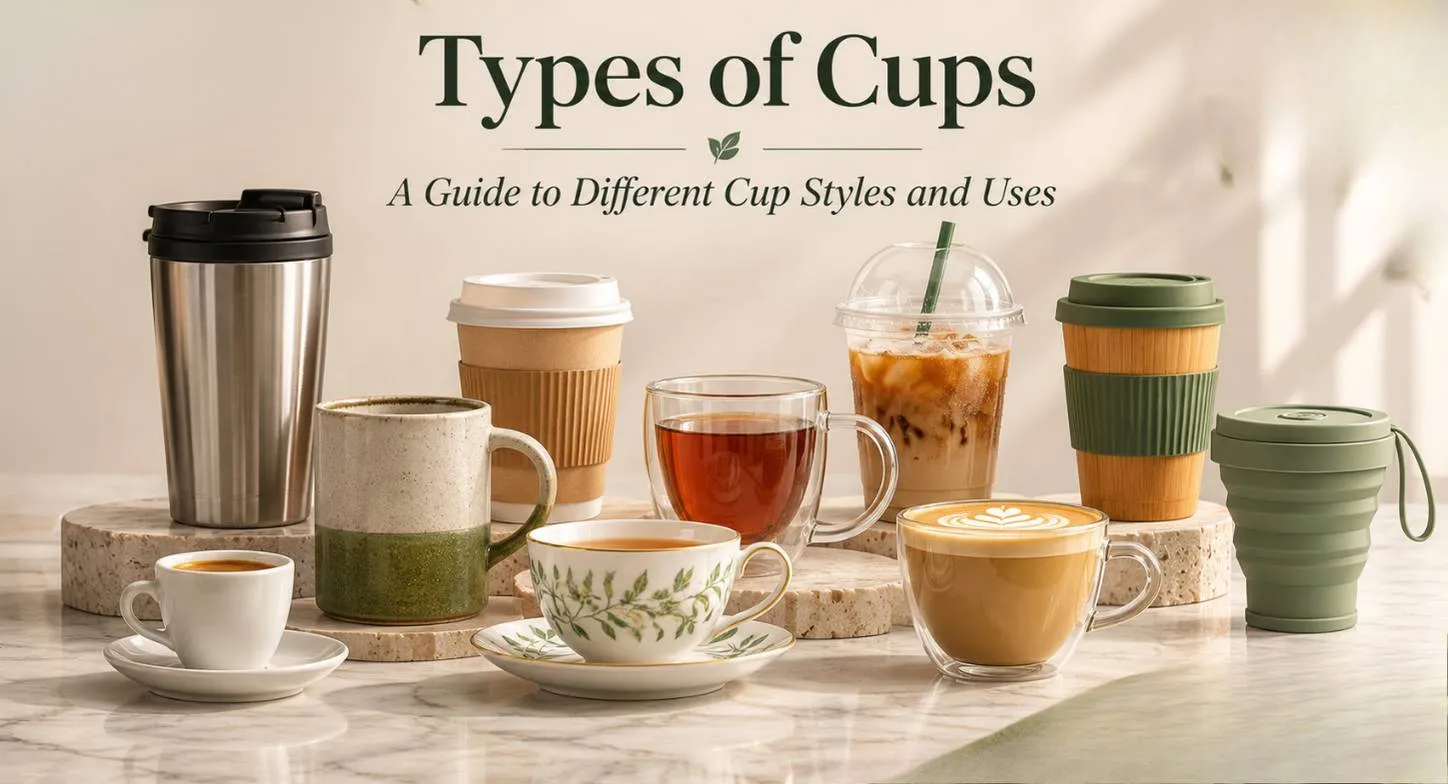
Types of Cups: A Guide to Different Cup Styles and Uses
The right cup can make a real difference to the way a drink is served and consumed. The material, capacity, insulation, and design affect how well it retains temperature, its durability, portability, and appearance. A small porcelain cup is ideal for espresso; a well-insulated stainless steel tumbler is best for keeping your drink hot or cold while you’re on the move.
What are the different types of cups?
Different types of cups are drinking containers for holding and serving drinks. They differ in material, shape, capacity, degree of insulation, and purpose.
Some are for everyday use, and some are for a specific purpose (espresso, traditional tea, cold drinks, takeaway, etc.).
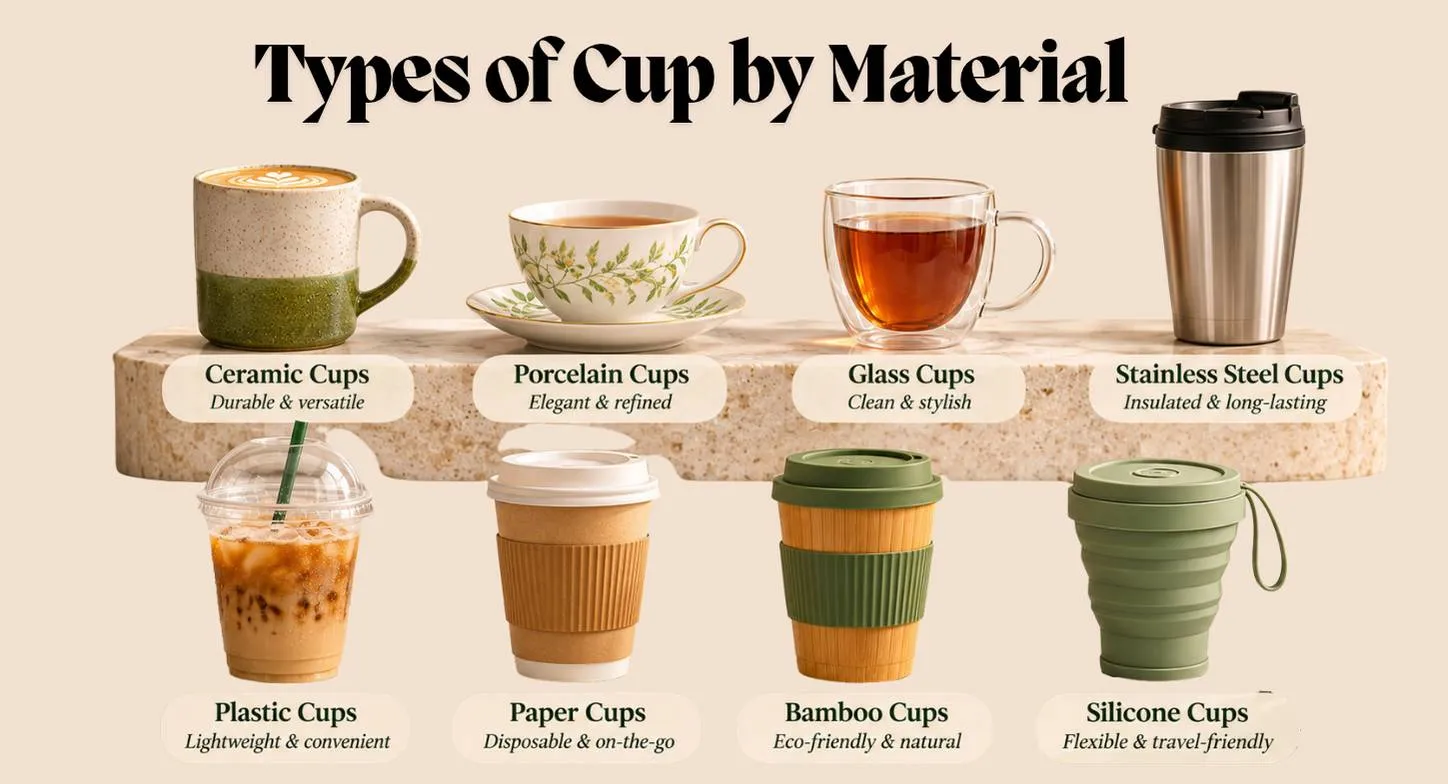
- Ceramic mugs: for your everyday coffee, tea, and hot chocolate.
- Porcelain cups: traditional tea service and refined coffee presentation.
- Glass cups: water, juice, iced coffee, and layered drinks.
- Stainless steel cups: travel, outdoor use, and temperature-controlled drinks.
- Plastic cups: parties, casual dining, takeaway.
- Paper cups: disposable coffee, tea, and cold drinks.
- Bamboo cups: reusable drinkware made from bamboo or bamboo-based materials.
- Silicone cups: flexible, collapsible, and ideal for travel.
Beyond the material, you can group cups by their form. You’ve got mugs (with handles), tumblers (typically straight-sided), stemmed cups (with a raised base), and insulated cups (with a multi-layer construction to minimize heat transfer).
Types of Cups by Material
Ceramic Cups
Ceramic cups are by far the most common type of cup in use, for good reason. They’re durable, they’re versatile, and they come in a giant range of designs. They’re made from clay, which is formed, glazed, and then fired at high temperatures. You’ll find them in every home, every office, every café, and every restaurant.
Porcelain Cups
Porcelain cups are made from refined ceramic, which is then fired at high temperature to produce a dense, smooth, and quite elegant surface. They are the cups you’d normally associate with a traditional tea set, fine dining, and the like.
Glass Cups
Glass cups are transparent drinking vessels that will show the color, texture, and presentation of the drink. They’re used for water, juice, iced coffee, smoothies, specialty drinks, and tea.
Stainless Steel Cups
Stainless steel cups are tough, reusable, and corrosion resistant, so they’re ideal for travel, camping, outdoor use, etc. They’re far less likely to break than a glass or ceramic cup.
Plastic Cups
Plastic cups are light, very versatile, and available in both disposable and reusable forms. They’re used at parties, in restaurants, in cafeterias, at outdoor events, and for takeaways.
Paper Cups
Paper cups are used extensively by coffee shops, cafes, restaurants, and offices and takeaways. They’re a convenient way of serving hot and cold drinks without the customer having to go back and get their own re-usable drinkware.
For takeaway beverage businesses, paper coffee cups are an important form of primary packaging because they hold beverages directly and support convenient serving.
Bamboo Cups
Bamboo cups come in a natural-looking design and are promoted as a reusable alternative to conventional single-use drinkware. They can be made from bamboo, bamboo fibers, or a composite of bamboo and other binding agents.
Silicone Cups
Silicone cups are flexible and lightweight, and there are a whole range of reusable designs out there that are ideal for travel, camping, etc. Many are made from food-contact-grade silicone and are designed to be simple to handle and store.
Types of Cups by Design and Shape
Cup design has a bearing on how comfortably the drink can be held, poured, served, and consumed. Some cups are designed for convenience and some for insulation, portability, and presentation.
Standard Drinking Cups
Standard drinking cups are pretty simple, really, designed for the everyday drink. They’ll have an open top and a fairly basic shape, with or without a handle.
Handle Cups
Cups with a side handle (i.e., you can hold the cup without gripping the main body) are available. These are particularly useful for hot drinks, as they give you a separate area to hold the cup.
Stemmed Cups
Stemmed cups and glasses have a bowl with a narrow stem and a solid base. The idea is that you can hold the cup with the stem, thus keeping your hand away from the bowl.
Double-Walled Cups
Double-walled cups have two walls with an insulating space between them to reduce the transfer of heat from the drink to the outside of the cup. That space can be either air or a vacuum depending on the product.
Insulated Cups
Insulated cups are designed to keep your drink at the desired temperature for longer than you’d get with an equivalent uninsulated cup. A lot of them will be double-walled with vacuum insulation (particularly the stainless steel travel mugs and tumblers).
Collapsible Cups
Collapsible cups are designed to fold down or compress into a smaller size when empty (very useful for travel and for storage in small spaces). They’re typically made from flexible silicone and have a reinforced rim or a supportive base.
Types of Coffee Cups
Different coffee drinks are generally served in different cup styles and sizes. The cup’s shape, material, and size affect its appearance, temperature retention, and drinking experience.
Coffee brands offering single-serve coffee pods may also need custom K-Cup boxes to organize, protect, and present their products for retail sale.
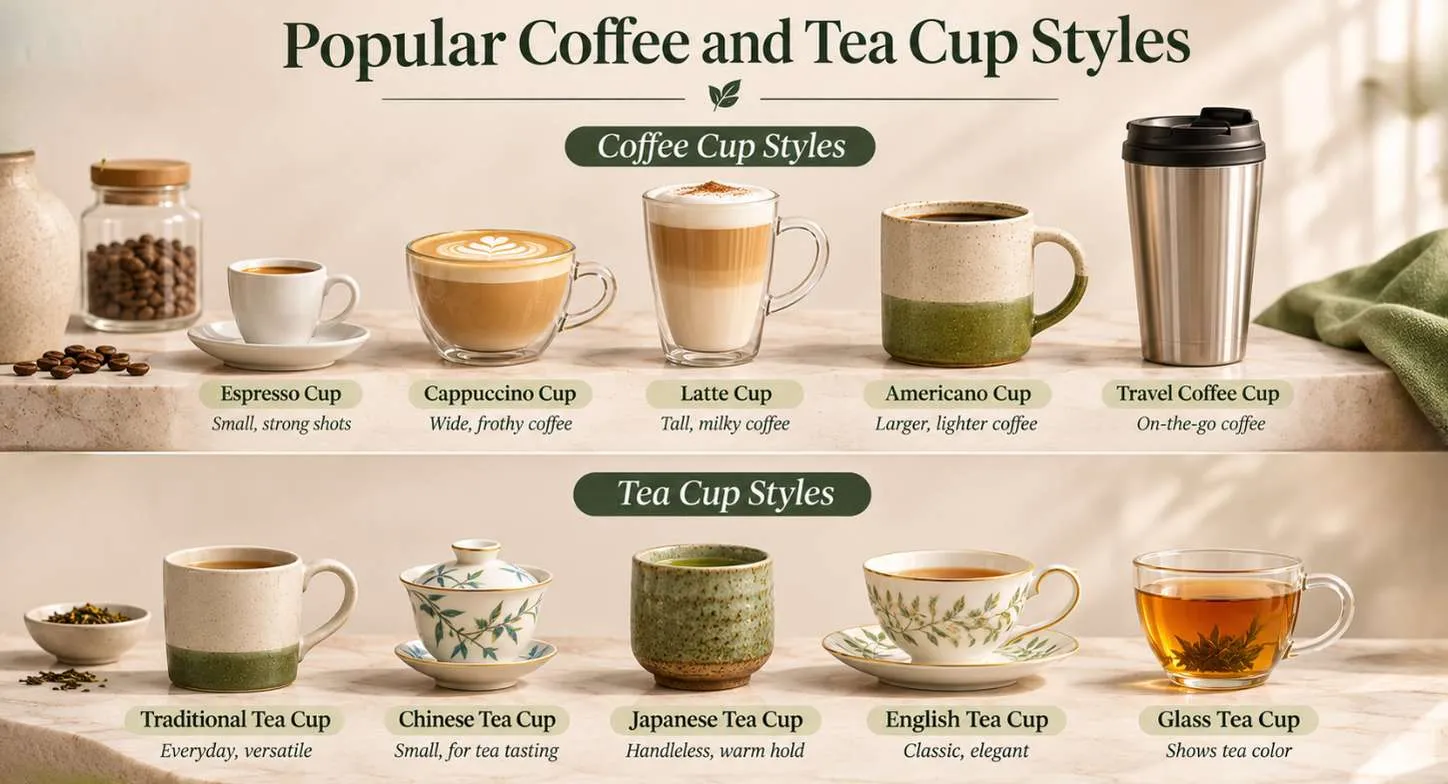
Espresso Cups
Espresso cups are small cups designed for serving concentrated espresso shots. They’re often referred to as demitasse cups.
The majority are around 2-3 oz, although they do vary from manufacturer to manufacturer and from serving style to serving style.
They’re generally made from thick porcelain or ceramic, which helps minimize the rate of temperature loss.
- Small serving capacity.
- Thick walls in many of the traditional designs.
- Compact shape.
- Available with or without a handle.
Cappuccino Cups
Cappuccinos are in general wider than espresso cups and have sufficient capacity to hold the espresso, steamed milk, and milk foam.
Common serving sizes are in the region of 5-6 oz, though larger cafe servings are also available.
Many have a rounded bowl to provide room for the milk foam and latte art.
- Medium serving capacity.
- Rounded bowl.
- Comfortable handle.
- Usually porcelain or ceramic.
Latte Cups
Latte cups are typically larger than your standard espresso or cappuccino cup and have sufficient capacity to hold the espresso plus a generous amount of steamed milk.
They can be ceramic, porcelain, or glass, and glass ones are particularly popular as they show off the layers of espresso and milk.
Typical capacities are generally in the region of 8-12 oz, though cafe serving sizes will of course vary.
- Larger capacity.
- Wide opening in many of the designs.
- Suitable for milk-based coffee.
- Available in ceramic and transparent glass.
Americano Cups
Americano cups are normally standard coffee mugs or cups with enough capacity to hold the espresso and the added hot water.
Their form is not fixed at all. They can be ceramic, porcelain, or glass depending on the cafe and what the individual prefers.
Common serving sizes are around 8-12 oz, although larger servings are also available.
- Medium to large capacity.
- Comfortable drinking rim.
- Often includes a handle.
- Available in everyday and cafe style.
Travel Coffee Cups
Travel coffee cups are for the person who wants to take their coffee with them when they’re commuting, travelling, or working outside.
They typically have insulated walls, secure lids, and spill-resistant drinking openings. Some are vacuum-insulated stainless steel; others are made from reusable plastic or other materials.
- Portable design.
- Secure or spill-resistant lid.
- Insulated construction in many of the models.
- Easy-to-carry shape.
Types of Tea Cups
Tea cups come in all sorts of shapes, all sorts of materials, and all sorts of cultural designs. Some are obviously designed to be pretty; others are designed for the purpose of brewing and serving in a traditional way.
For tea brands that also sell packaged tea products, custom tea boxes can help protect those products and create a consistent branded presentation alongside their drinkware.
Traditional Tea Cups
Traditional teacups are made of porcelain, ceramic, or bone china and will typically have a rounded bowl, a small handle, and a matching saucer.
Their size and shape will vary depending on the tea tradition and the way you’re going to serve it.
- Black tea.
- Green tea.
- Herbal tea.
- Afternoon tea service.
Chinese Tea Cups
Chinese tea cups are available in several traditional styles, including the small handleless cup used in Gongfu-style tea.
These are typically porcelain, ceramic, or glass cups and have a relatively small capacity so tea can be poured out in several short infusions.
Some traditional Chinese tea cups are sold with a matching teacup set and serving ware.
- Oolong tea.
- Green tea.
- White tea.
- Traditional Chinese tea ceremonies.
Japanese Tea Cups
Japanese tea cups come in several traditional styles, the yunomi and the matcha bowl being two of the more familiar.
Yunomi cups are basically cylindrical and handleless and are the cups you’d use for your everyday tea. Matcha is traditionally prepared and served in a wider bowl (a chawan).
These are generally ceramic or porcelain vessels, the designs being very much in the Japanese pottery tradition.
- Sencha and other Japanese green teas.
- Everyday tea drinking.
- Matcha preparation and serving.
English Tea Cups
English teacups are, of course, the thing that comes to mind when you think of afternoon tea and formal table settings.
They’re typically made from fine porcelain or bone china and can be quite ornate with patterns, delicate handles, and matching saucers.
Their look can be anything from traditional florals to basic contemporary styles.
- English breakfast tea.
- Earl Grey.
- Afternoon tea.
- Formal hospitality service.
Glass Tea Cups
Glass teacups give you a clear view of the tea, so they’re ideal for teas that have nice colors and are layered.
They’re available in single-wall and double-wall. The double-walled borosilicate glass cups are particularly popular for serving hot tea, as the double-wall construction minimizes heat transfer to the outside surface.
- Green tea.
- Herbal tea.
- Flowering tea.
- Layered specialty tea drinks.
Types of Cups for Different Drinks
The best cup is the one that’s right for the temperature, consistency, volume, and presentation.
Water Cups
Water cups are everyday drinking containers (glass, plastic, ceramic, stainless steel, etc.).
Available in simple straight-sided designs, tumblers, handled cups, and insulated bottles or cups.
- Drinking water at home.
- Restaurant table service.
- Office hydration.
- Outdoor activities.
Juice Cups
They are commonly made from glass, plastic, or reusable stainless steel.
Their capacity varies depending on whether they are used for small servings or larger portions.
- Clear or colored construction.
- Easy-to-hold shape.
- Medium serving capacity.
- Available in disposable and reusable designs.
Smoothie Cups
Smoothie cups are usually larger than traditional juice cups because smoothies often contain blended fruit, vegetables, yogurt, or other ingredients.
They are available in reusable and disposable designs, including clear plastic cups that allow the drink’s color and texture to remain visible.
Many takeaway smoothie cups are paired with compatible lids and wide openings for straws.
- Larger serving capacity.
- Wide openings in many designs.
- Suitable for thick beverages.
- Often made from clear plastic or reusable materials.
Cocktail Cups
Cocktail cups come in several specialized shapes designed for different drink styles and presentation preferences.
Popular examples include martini glasses, coupe glasses, margarita glasses, and stemless cocktail tumblers.
Each design provides a different appearance and serving experience.
- Classic cocktails.
- Margaritas.
- Martini-style drinks.
- Specialty restaurant and bar service.
Milkshake Cups
Milkshake cups are designed for thicker, creamy beverages. They are commonly made from glass, reusable plastic, or disposable plastic.
Traditional diner-style milkshake glasses often have a tall, straight-sided shape, while takeaway versions may feature wider openings and compatible lids.
- Chocolate milkshakes.
- Vanilla and strawberry milkshakes.
- Thick smoothies.
- Ice cream-based beverages.
Types of Disposable and Reusable Cups
Disposable Cups
Disposable cups are designed for one-time or short-term use. They are commonly found in coffee shops, takeaway restaurants, catering services, offices, and public events.
They may be made from paper, coated paperboard, plastic, or foam materials.
- Single-wall paper cups.
- Double-wall paper cups.
- Ripple-wall paper cups.
- Clear plastic cold cups.
- Disposable foam cups.
- Convenient for takeaway orders.
- No washing required.
- Available in different capacities.
- Easy to print with business branding.
- Suitable for high-volume beverage service.
- Generate waste after use.
- Recycling availability varies by material and location.
- Some designs contain coatings that complicate disposal.
Reusable Cups
Reusable cups are designed for repeated use and are available in ceramic, porcelain, glass, stainless steel, silicone, and suitable plastics.
- It can be used repeatedly.
- Available in durable materials.
- Reduce dependence on single-use cups when reused regularly.
- Offer a wide range of designs and capacities.
- Require washing and maintenance.
- Some materials can break or wear over time.
- Insulated models may have lids and seals that need additional cleaning.
Compostable Cups
Compostable cups are designed to break down under specified composting conditions and become part of usable compost.
They may be made from paperboard with suitable compostable coatings, plant-based materials, or other certified compostable components.
However, not every cup marketed as eco-friendly or plant-based is automatically compostable.
Some products require commercial composting facilities and may not break down properly in a home compost pile.
- May use plant-based or certified compostable materials.
- Available for hot and cold beverages.
- Often used by cafes and environmentally conscious food businesses.
- Require appropriate disposal conditions.
Important: Verify the product’s compostability certification and local waste-management requirements. The U.S. Federal Trade Commission explains that compostable claims should be supported by evidence and clearly qualified when appropriate composting facilities are not widely available.
How to Choose the Right Type of Cup
Selecting the right cup involves more than choosing an attractive design. The material, intended use, capacity, durability, and temperature requirements should all be considered.
Consider the material.
Start by identifying the material that best fits your requirements.
Ceramic and porcelain are popular for hot drinks, glass is useful for beverage presentation, and stainless steel is practical for travel and outdoor use.
Plastic and paper cups are common for takeaway service, while silicone provides flexibility and portability.
Think About the Intended Use
- Home and office: Ceramic mugs, glass cups, and porcelain tea cups.
- Cafes: Paper cups, ceramic mugs, and specialty coffee cups.
- Travel: Insulated stainless steel cups and travel mugs.
- Outdoor activities: Durable plastic, stainless steel, and silicone cups.
- Formal dining: Porcelain cups and stemmed glassware.
- Takeaway businesses: Disposable paper and plastic cups designed for the beverage.
Check Cup Size and Capacity
Cup capacity determines how much liquid the container can hold. Small espresso cups may hold only a few ounces, while large travel tumblers and smoothie cups can accommodate much larger servings.
Think about the typical portion size and the amount of additional space required for milk, ice, foam, or toppings.
Consider Durability and Maintenance
Different materials require different levels of care.
Stainless steel is generally suitable for frequent travel, while glass and ceramic need more careful handling. Plastic and silicone options vary depending on their construction and intended use.
Look at insulation and temperature resistance.
Ceramic, porcelain, and double-walled glass are common choices for hot drinks. Vacuum-insulated stainless steel is particularly useful when beverages need to maintain their temperature for longer periods.
Frequently Asked Questions
What are the most common types of cups?
Which cup material is best for everyday use?
What are the different types of coffee cups?
What is the difference between a mug and a cup?
Which types of cups are best for hot drinks?
Are glass or ceramic cups better?
Choosing the Right Type of Cup
The different types of cups available today offer practical solutions for almost every beverage and serving situation. Ceramic and porcelain cups are popular for everyday coffee and tea, glass cups provide attractive beverage presentation, and stainless steel options offer durability and convenience for travel.
Paper and plastic cups are useful for takeaway services and events, while reusable and compostable options provide alternatives depending on the product’s materials, intended lifespan, and disposal requirements.
Before choosing a cup, consider its material, shape, capacity, durability, and suitability for hot or cold beverages. The right combination of these features will help you select drinkware that meets your needs and provides a better serving experience.