

In Stock
Two Piece Rigid Boxes
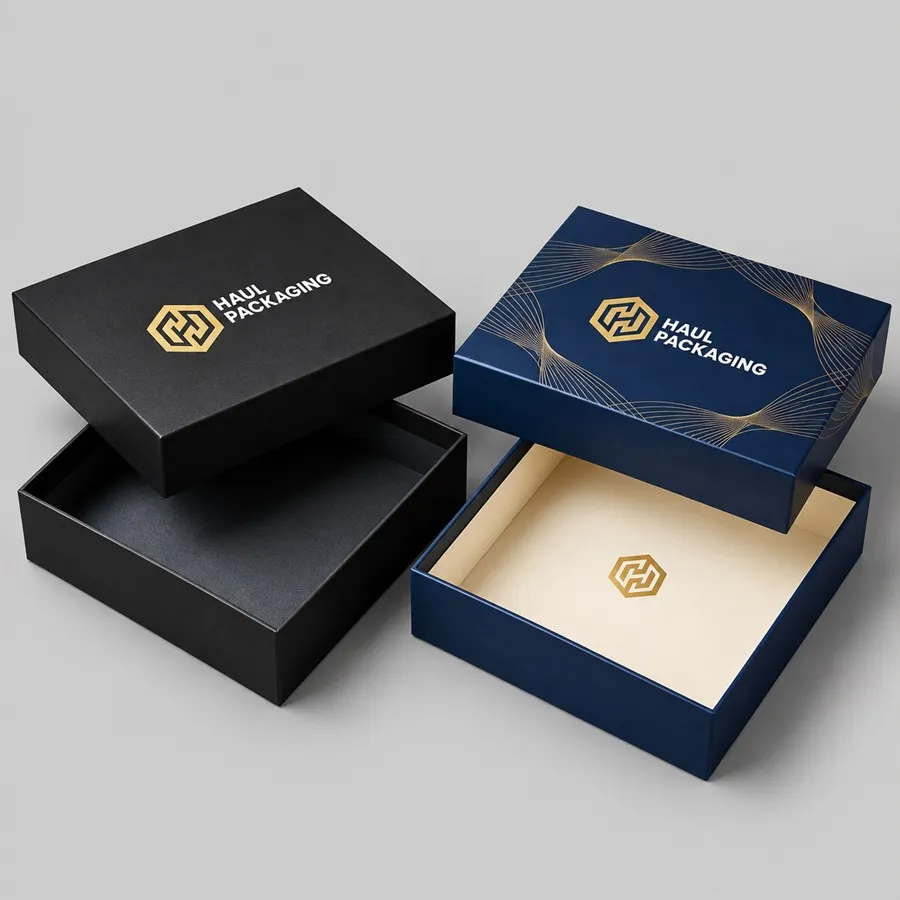
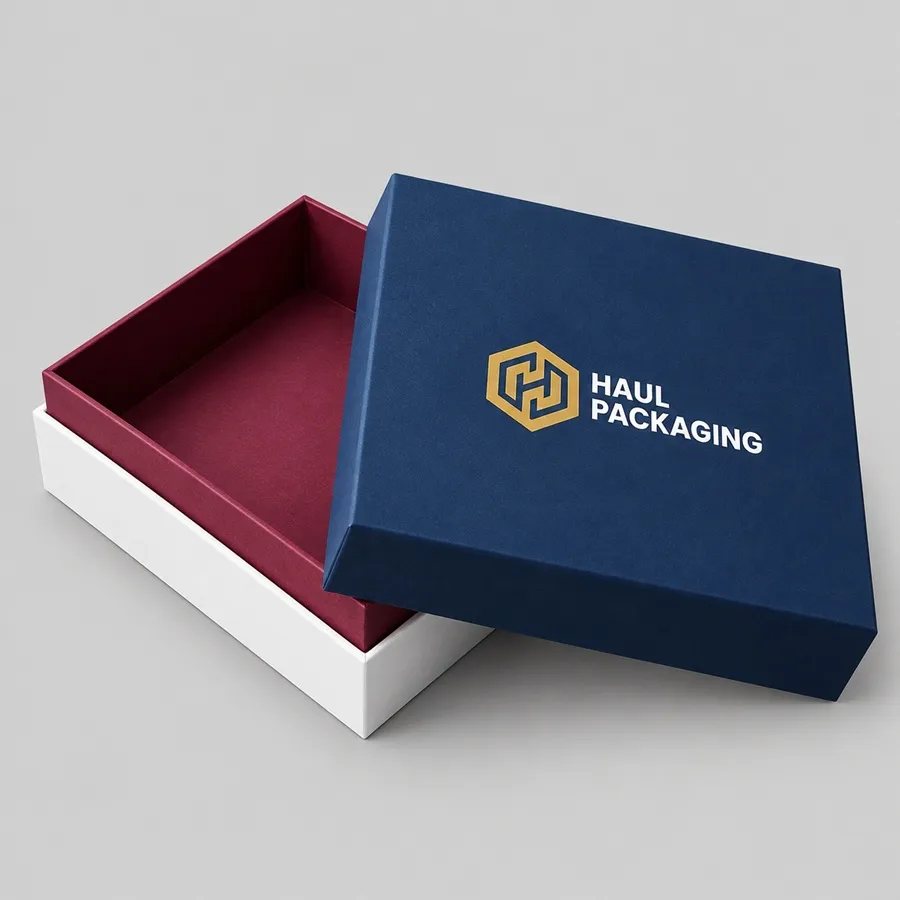
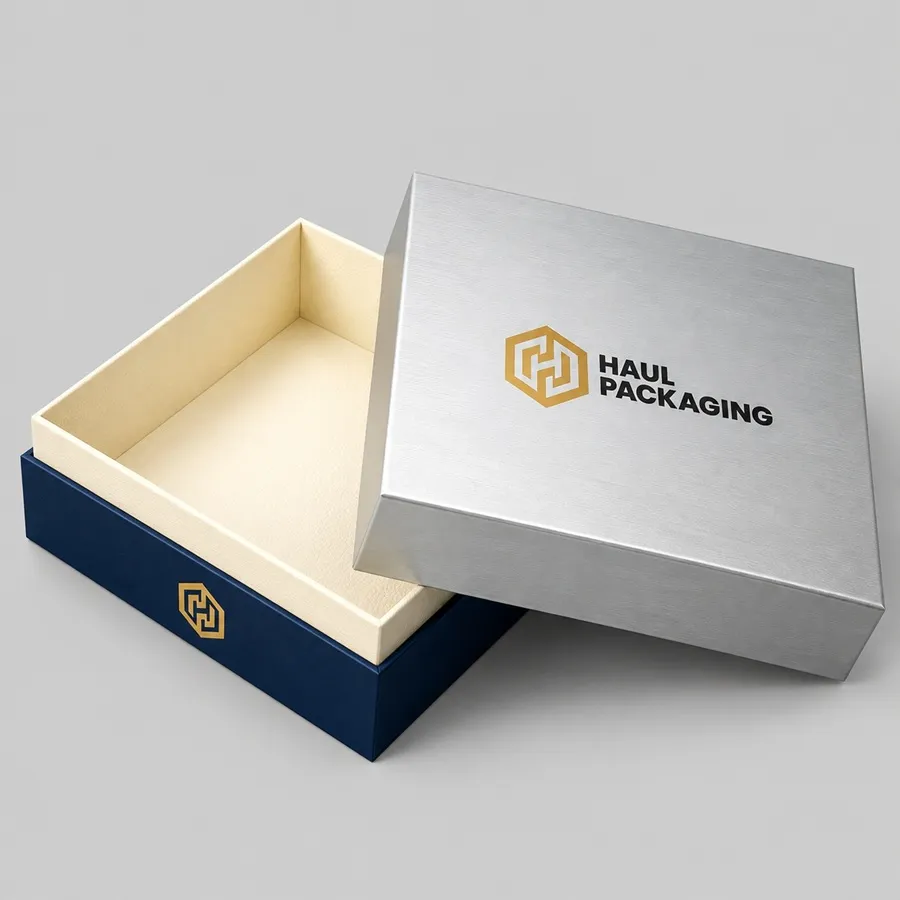
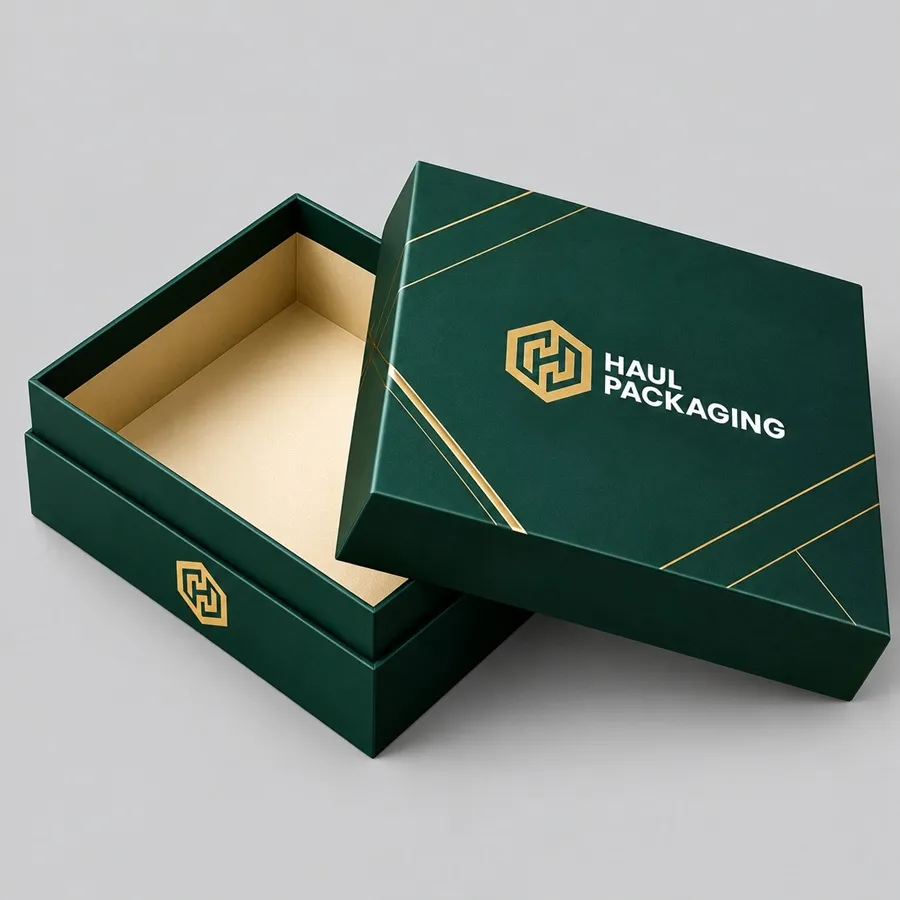
Two piece rigid boxes come with a separate lid and base, making them a practical choice for packaging gifts, cosmetics, accessories, or promotional sets. Start by selecting the right size and lid depth for your product. You can customize the outer wrap with your branding, foil stamping, embossing, textured papers, or fitted inserts. Before moving forward, double-check the fit, finish, and order quantity to make sure everything meets your needs.
Trusted Payment Methods






No Die & Plate
Charges

Quick turnaround
time

Free & Shipping

Starting from
50 boxes

customize size
& style

free graphics
designing
- Details
- Specifications
A Box in Two Parts. A Presentation Designed Around Your Product.
Some packaging has to do more than just contain an item; it must present the product in a neat way, keep the components in order, and make a good first impression.
That is why two-piece rigid boxes are suitable. They have a separate bottom part and a removable lid. Rather than opening on a hinge or sliding out of a sleeve, the lid lifts off the base to show the contents.
The simple design provides flexibility with regard to size, the internal layout, and branding. The final appearance can be plain and minimal or highly detailed, according to your product and visual identity.
How the Lid, Base, and Interior Work Together
1. The Lid: Your First Branding Opportunity
The lid is generally the first surface that customers come across; it may have a central logo, printed artwork, the name of the product, a simple brand mark, or decorative finishing.
2. The Base: Space for the Product
The size of the base affects the amount of interior space that is available; it should be long, wide, and deep enough to hold the product, the protective wrapping, the inserts, and any accessories that come with the package.
3. The Interior: A Place for Every Component
A single product can be adequately displayed in a simple box interior, while multi-item sets can make use of a custom insert to separate the products and give each one a clearly defined position.
For different applications the interior can have paperboard dividers, shaped inserts, product platforms, or cushioning materials, but the availability and suitability of the material should be checked for the particular project.
Which Two-Piece Rigid Box Configuration Is Right for You?
The standard lid-and-base design is very versatile, but it is not necessary for every product to have the same proportions or internal arrangement.
| Packaging requirement | Design direction to consider | What to confirm |
| A single gift or accessory | A straightforward lid-and-base box | Product clearance and lid fit |
| Several products in one package | A deeper base with a planned insert or dividers | Placement and separation of each item |
| A shallow product | A lower-profile base and suitable lid depth | Ease of opening and available interior space |
| A presentation set with printed materials | An interior layout that accommodates both products and inserts | Total contents and opening sequence |
| A premium retail presentation | Coordinated wrapping, branding, and selected finishes | Color, texture, finish, and artwork placement |
| A product that needs organized storage | A fitted insert or compartment layout | Product movement and repeated access |
Two-Piece Rigid Boxes vs. Other Rigid Box Styles
It is possible to avoid unnecessary revisions by selecting a box structure before designing the artwork; even though different rigid-box styles use similar materials, their methods of opening and actual applications are not the same.
| Box style | How it opens | Consider it when |
| Two-piece rigid box | The lid lifts away from the base | You want a classic, separate-lid presentation. |
| Magnetic closure rigid box | An attached lid opens and closes, commonly with a magnetic closure. | You prefer a hinged opening. |
| Sleeve rigid box | An outer sleeve slides over or away from an inner tray. | You want a sliding reveal. |
| Shoulder-neck rigid box | The lid fits around a raised shoulder or neck on the base. | You want a defined, layered box structure |
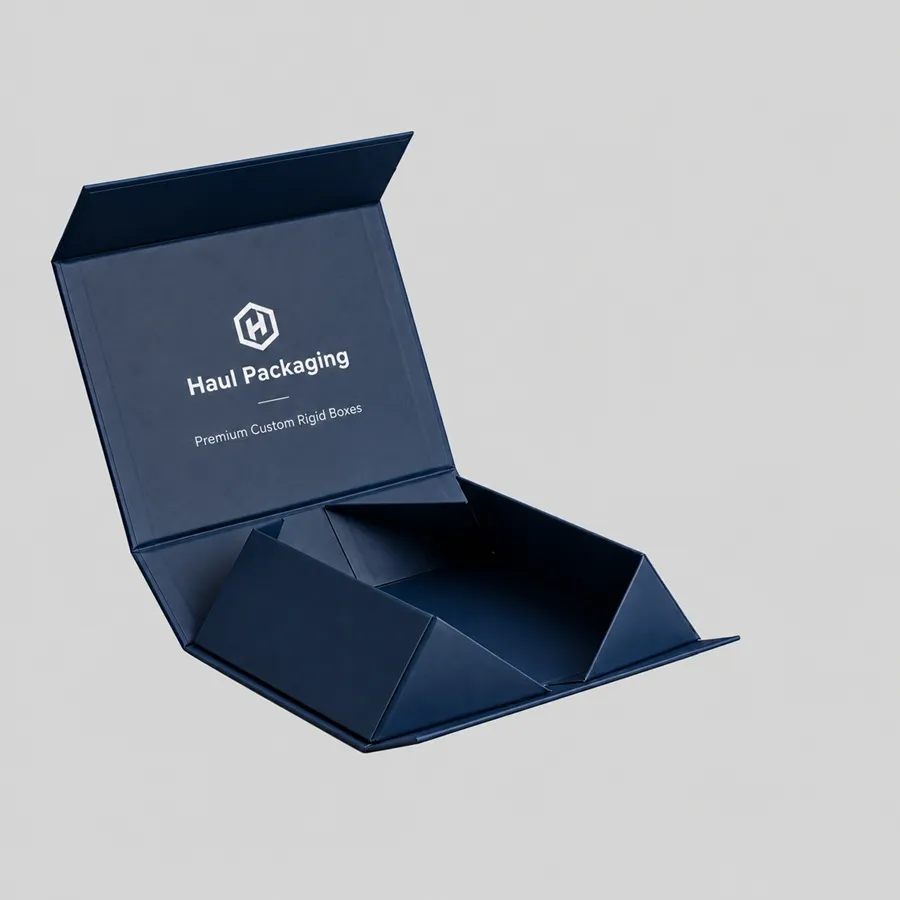
| Collapsible rigid box | The structure folds down for storage and is assembled for use. | Reducing storage space before assembly is a priority. |
Where Two-Piece Rigid Boxes Fit Best
Jewelry and Accessories
Small accessories can have the advantage of a well-defined interior and a coordinated exterior; an insert can be used to hold the various parts in place, while a simple finish ensures that the design remains focused.
Cosmetics and Skincare Sets
Two-piece packaging can be used for single items or for curated collections; when dealing with sets containing multiple products, you should decide on the position of each bottle, jar, tube, or carton before finalizing the interior.
Apparel and Fashion Accessories
A rigid box of the right proportions can be used to hold folded accessories, small clothes, or matching fashion items; the dimensions of the base will vary according to the size of the product when folded and the amount of tissue or extra wrapping.
Gifts and Special Collections
A lid that can be removed is suitable for use in presenting gifts since it provides a simple and easily recognized way of opening the package. The interior should be kept simple or arranged so as to hold a number of items depending on what is contained.
Brand Launches and Promotional Kits
Two-piece boxes can be arranged for use in a product launch, as branded gifts, or for a particular product collection. The base will have to be able to hold the products together with a welcome card, printed information, or other campaign materials.
Customization: Build the Look Without Overcomplicating It
Printed Wraps and Brand Artwork
Printed or decorative paper can be used so that the lid and the base match your brand identity. The exterior might include a logo, a pattern, the product name, an illustration, or a combination of those elements depending on the artwork.
Foil Stamping
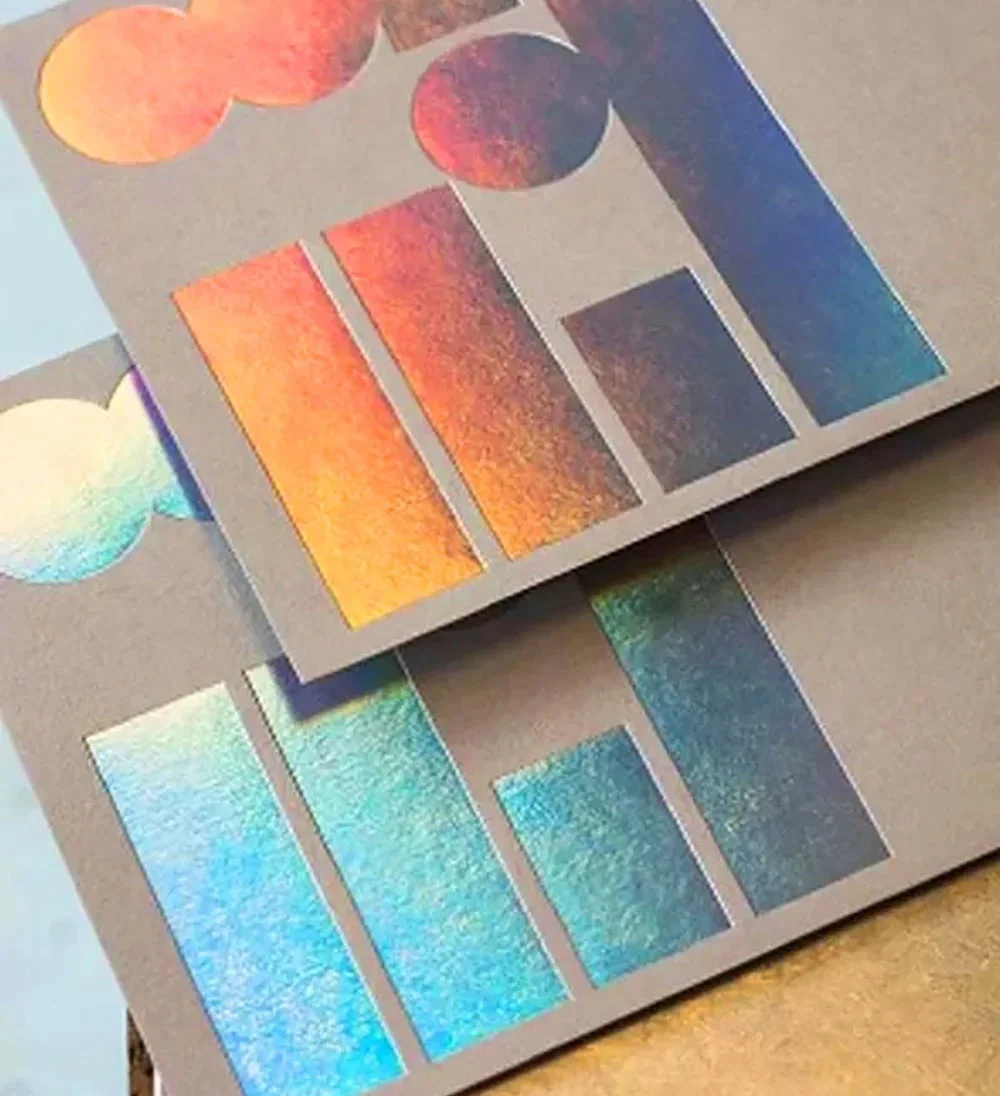
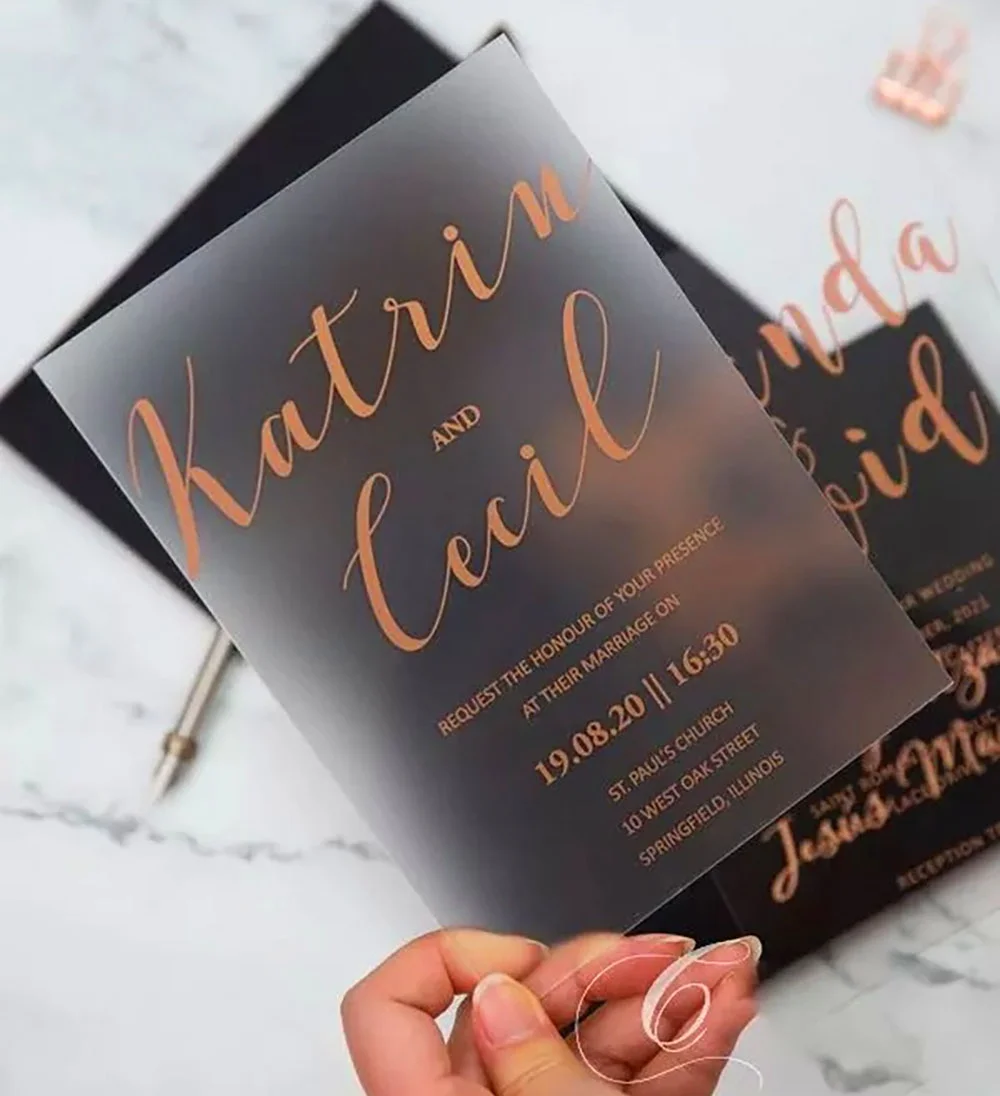
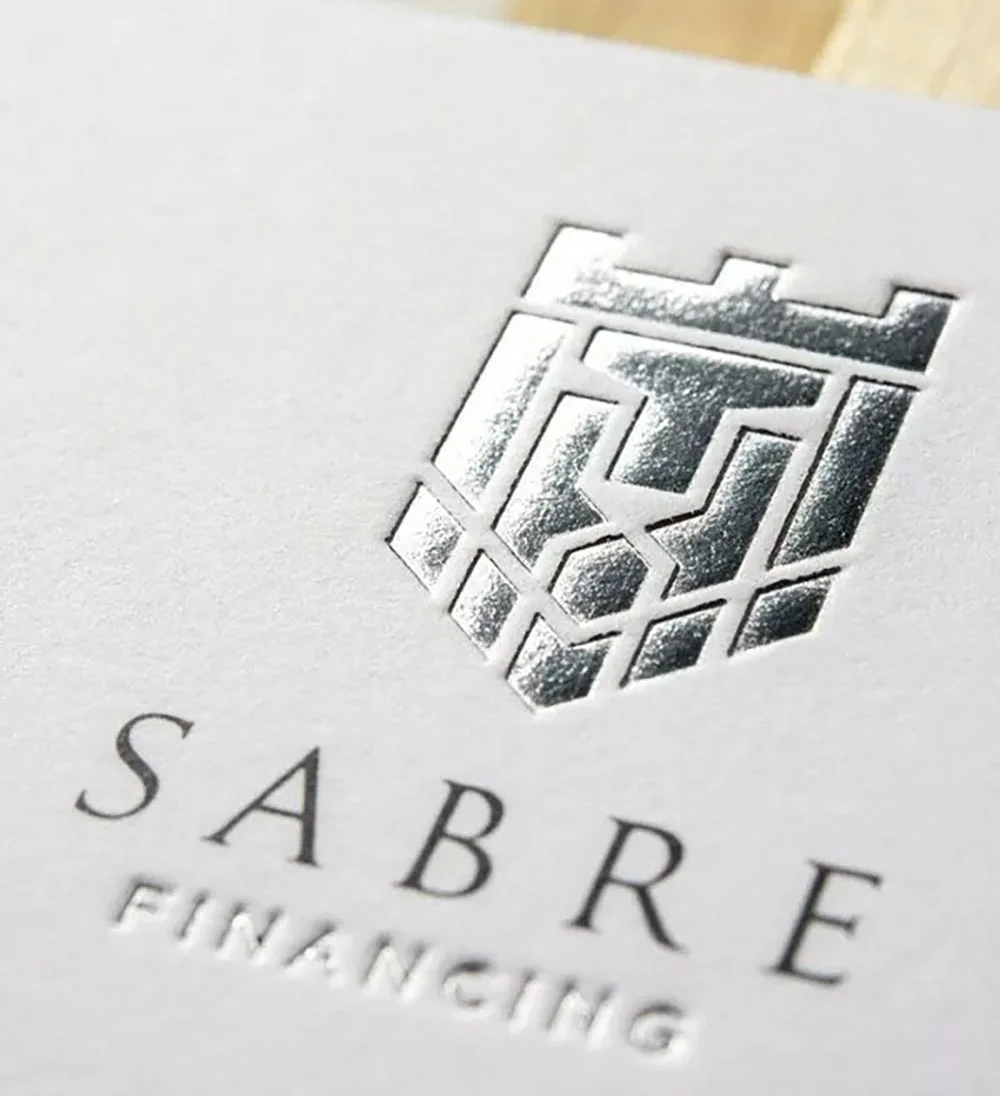
Foil stamping can be used to highlight a logo, a wordmark, a border, or a particular graphic detail. Although metallic finishes usually give a more upscale appearance, the design must include sufficient space so that the feature remains legible.
Embossing and Debossing
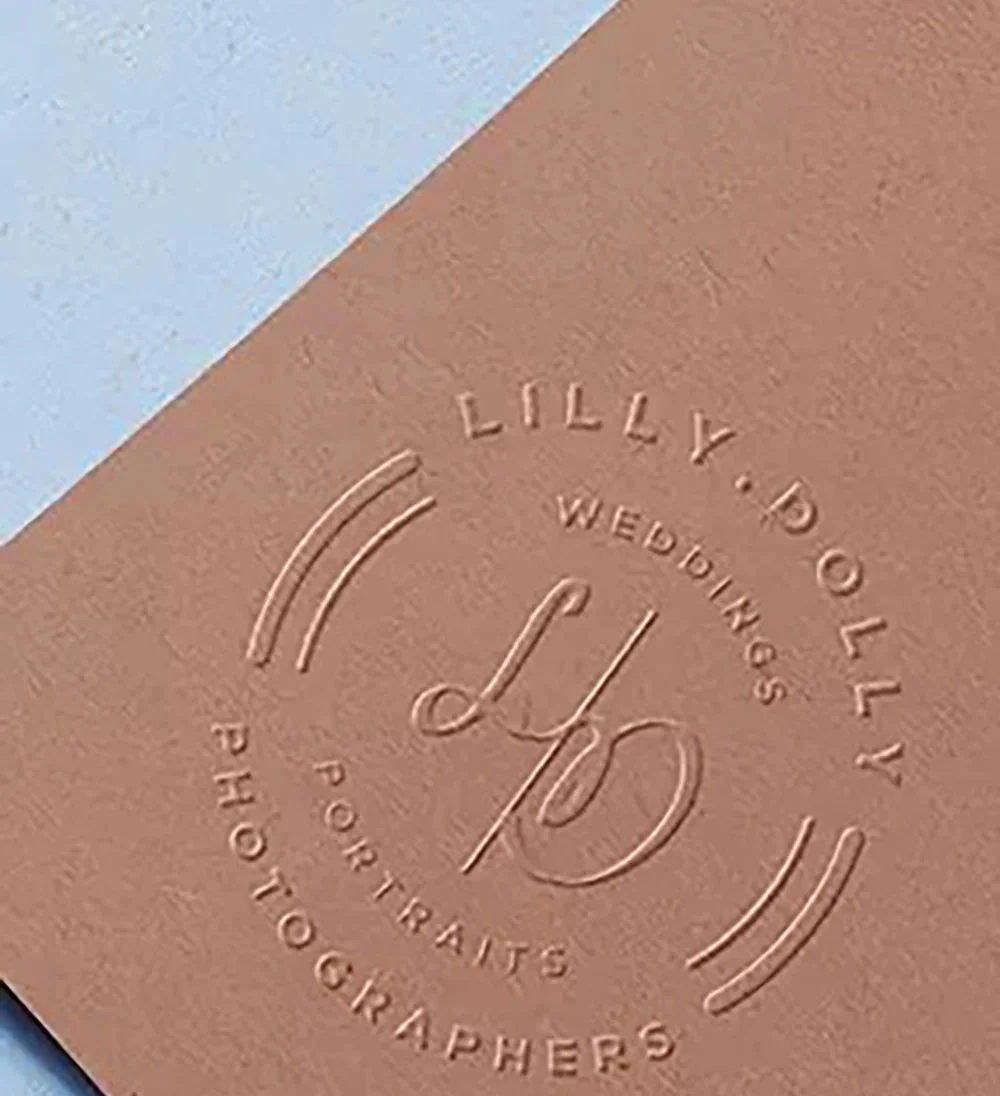
In embossing a particular part of the design is raised, whereas with debossing it is pressed into the surface. Both methods can give a three-dimensional effect to a brand logo or graphic.
Matte, Gloss, and Textured Surfaces
The appearance and feel of the final package are affected by the surface finish. A matte surface gives a more restrained look, whereas a glossy one produces a more reflective appearance. Textured wrapping paper adds another tactile feature.
Custom Inserts and Interior Details
An insert should be used to meet a particular packaging requirement; it can be used to keep a product in place, to divide a set into sections, or to offer a special spot for accessories.
- The exact dimensions and weight of each item.
- How many items the box will contain.
- Whether products require separate compartments.
- Whether protective wrapping is needed.
- Whether the insert should be visible or largely concealed.
- Whether printed cards or instructions must fit inside.
Material and Construction Considerations
Two-piece rigid boxes are usually constructed from rigid paperboard or chipboard and are then covered with a printed, laminated, or decorative wrapping. The board gives the boxes their shape, while the outer wrapping is responsible for their appearance and branding.
The specification that should be used is determined by the final dimensions, the weight of the product, its intended use, and the required presentation.
- Rigid board: the proposed board thickness and construction.
- Wrapping paper: the color, texture, print requirements, and finish.
- Interior material: whether an insert or lining is required.
- Surface treatment: whether the requested coating or embellishment suits the selected wrap.
- Product fit: whether the finished interior dimensions accommodate the item and any protective components.
The materials chosen should be considered as a whole in the specification. A surface that is attractive by itself might not be the most suitable option for all products or finishing processes.
When it is important to your project to use a paper-based or recyclable material, ask for the specific details of the material and make sure that the finished packaging is recyclable in the different markets where it will be used.
You should not assume that every combination of board, laminate, foil, adhesive, and insert has the same environmental characteristics.
Sizing Your Two-Piece Rigid Box Correctly
Start With the Product
Take the item's total length, width, and height measurements. Make sure to include any caps, handles, closures, accessories, or protective wrapping that will be packed with the item.
Allow for the insert.
Confirm the Lid Fit
Test the Actual Contents
If it is important to be in good health or to look presentable, ask for a physical sample when one is available. Put the real product in and ensure that you are able to pack it, take it out, and return it without any undue difficulty.
What Affects the Cost of Custom Two-Piece Rigid Boxes?
The cost of a custom box is determined by its full set of specifications and not merely by its size. Two boxes that have similar external dimensions may need different materials, inserts, finishing operations, or methods of production.
- Finished length, width, and depth.
- Board type and thickness.
- Lid-to-base proportions.
- Wrapping paper and surface treatment.
- Printing method and number of printed surfaces.
- Foil stamping, embossing, debossing, or other embellishments.
- Insert design and material.
- Order quantity.
- Sampling and artwork requirements.
- Packing, shipping, and delivery arrangements.
From Brief to Approved Box: A Practical Ordering Process
Step 1: Share Your Product Details
Step 2: Confirm the Box Structure
Step 3: Select Materials and Finishes
Step 4: Prepare and Review Artwork
Step 5: Review the Sample and Fit
Step 6: Confirm the Order in Writing
What is the difference between a two-piece rigid box and a folding carton?
Can rigid two-piece boxes be customized?
Can I add an insert to a two-piece rigid box?
How can I ensure the lid fits properly?
Are two-piece rigid boxes recyclable?
Give Your Product a Better-Fitting Presentation
The right two-piece rigid box begins with the product, not the decoration.
When you plan the lid proportions, base dimensions, interior layout, and finishing details together, the packaging can support both practical use and a cohesive brand presentation.
Whether you are developing a gift box, a cosmetic collection, an accessory package, or a branded product set, start with the measurements and the customer experience you want to create.
| Dimensions | All Custom Sizes, Shapes and Styles. |
| Printing | CMYK, PMS, Screen Printing, No Printing |
| Paper Stock | 10PT to 28 PT (60lb to 400 lb) Eco Friendly Kraft Stock, E-Flute Corrugation, Bux Board, Cardstock, Fancy Cardstock. |
| Quantity | 50 - 500,000 |
| Coating | Gloss, Matte, Spot Uv |
| Default Process | Die Cutting, Gluing, Scoring, Perforation |
| Options | Custom Window Cut Out, Gold/Silver Foiling, Embossing, Raised Ink, PVC Sheet. |
| Proof | Flat View, 3D Mock-up Physical Sampling, (On Request) |
| Turn Around Time | 4-6 Business Days, Rush Production Plans. |
| Shipping | Free Shipping. |
| Delivery Courier | FedEx Express Shipping, DHL, UPS, Skynet! |
FAQs
-
How tight is the lid to the base? Precision engineering is about doing it right. We have very tight tolerances in our manufacturing process to ensure it’s a good fit for shipping and handling, but easy for customers to open, he said. We can also add magnetic clasps for security.
-
What are the differences between two-piece boxes and other types of rigid boxes? Two-piece boxes are made with a separate top and separate bottom. Most style boxes have an attached lid. Telescopic sleeve boxes. The 2-piece design provides the easiest access and the most dramatic reveal experience.
-
What is the minimum quantity of custom printed boxes(2pcs only)? MOQ for our standard sizes is 50 pieces. We offer Premium 2-piece packaging for product launches & growing brands.
-
How do you ensure the two pieces are of equal quality? Strict quality control throughout the production process, including dimensional inspection, fit testing, and visual inspection of the lid and base to ensure perfect matching and consistent quality.
-
What are 2-piece rigid cartons made of? A two-piece rigid box is usually made from thick chipboard or rigid paperboard covered with printed, textured, laminated or decorative paper materials to provide durability and a Premium look.
-
What is in the two-piece rigid box? Cosmetic and jewellery rigid boxes, clothing, confectionery, candles, electronics, watches, perfumes, gift products, and luxury retail packaging.
-
Do you have eco-friendly 2-piece rigid boxes? Yes. Haul Packaging provides a range of recyclable, paper-based packaging to help companies with eco-friendly solutions.
-
Why choose Haul Packaging for your custom two-piece rigid boxes in the USA? Haul Packaging provides upscale materials, sophisticated finishing options, protective inserts, and scalable order quantities for retail and luxury brands in the USA, with two-piece rigid packaging. They can be customised.
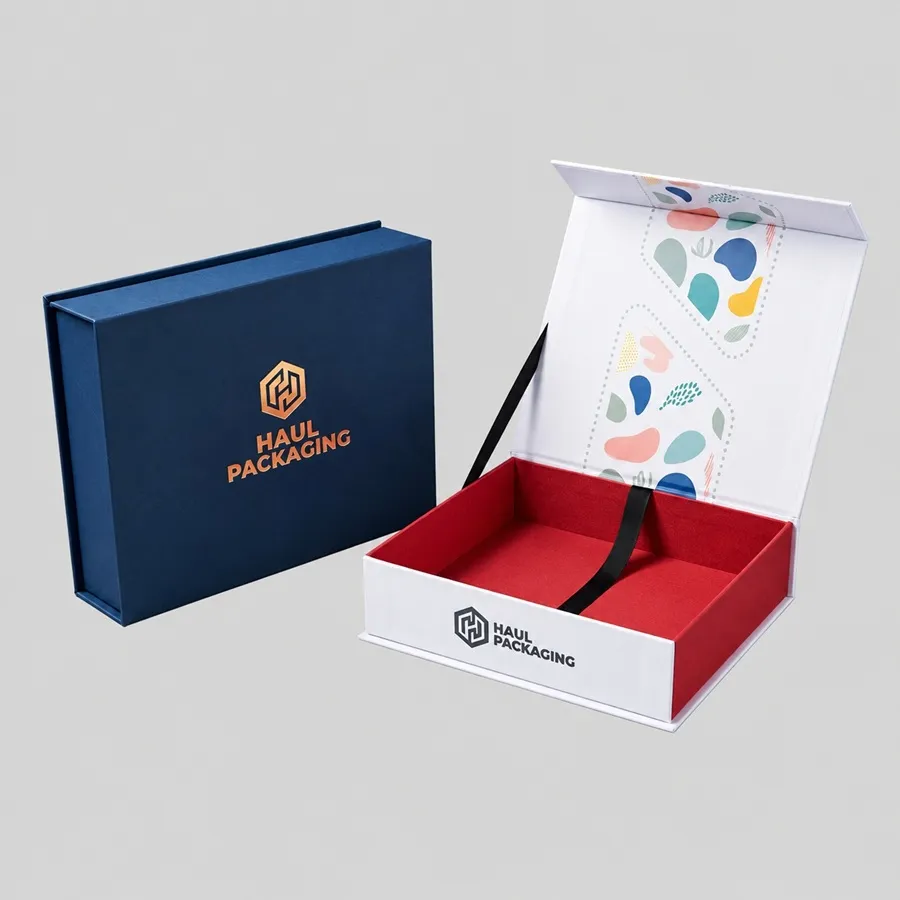
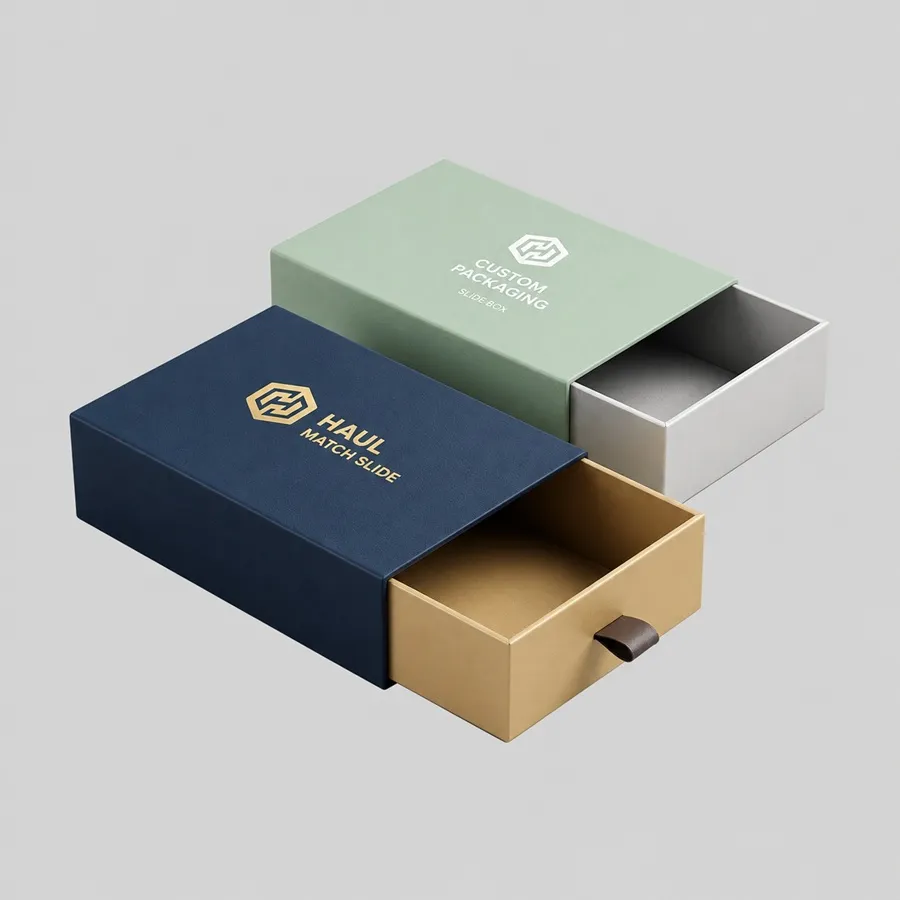
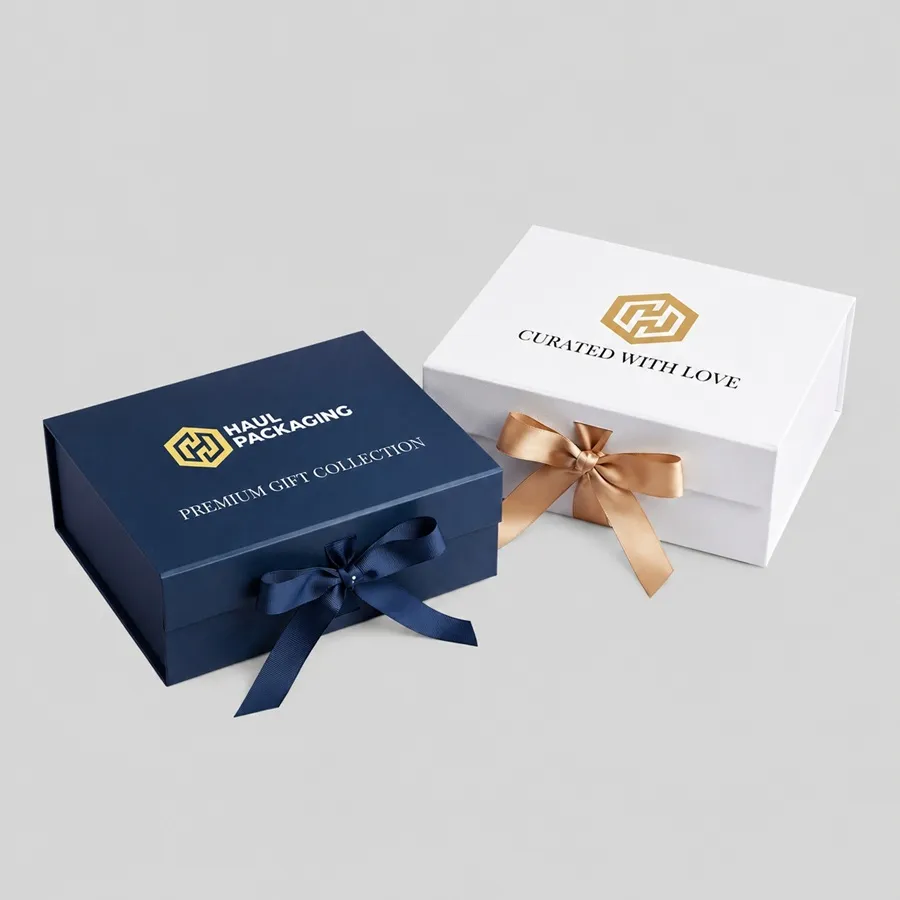
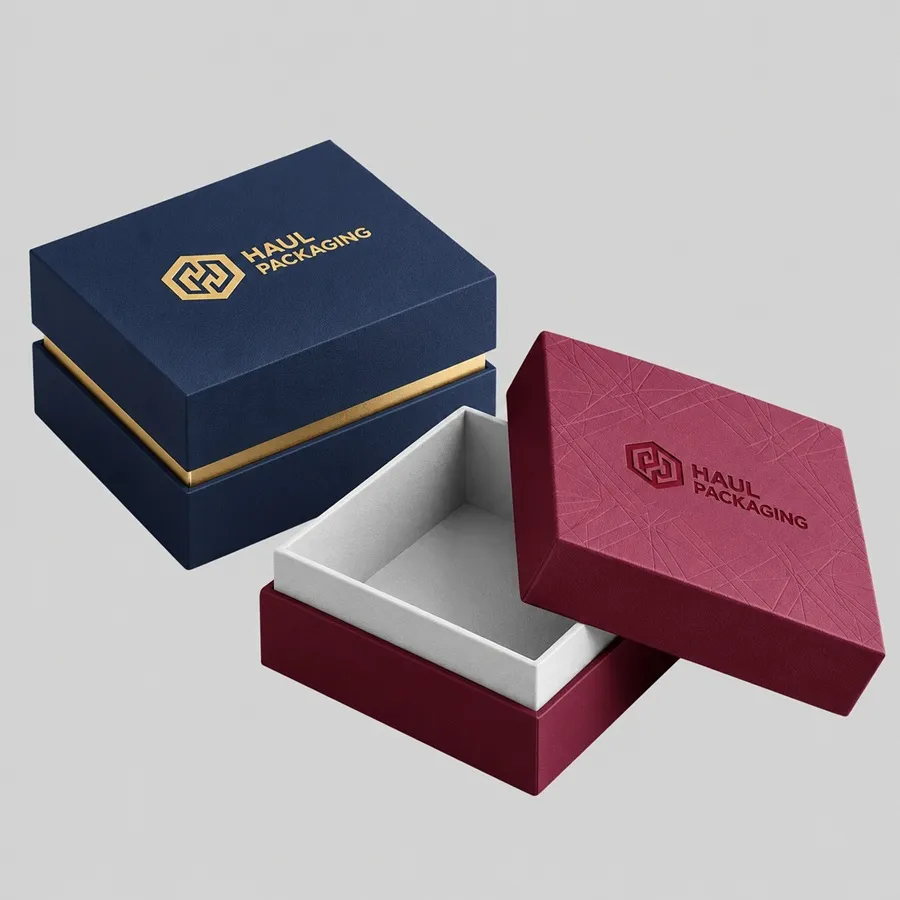
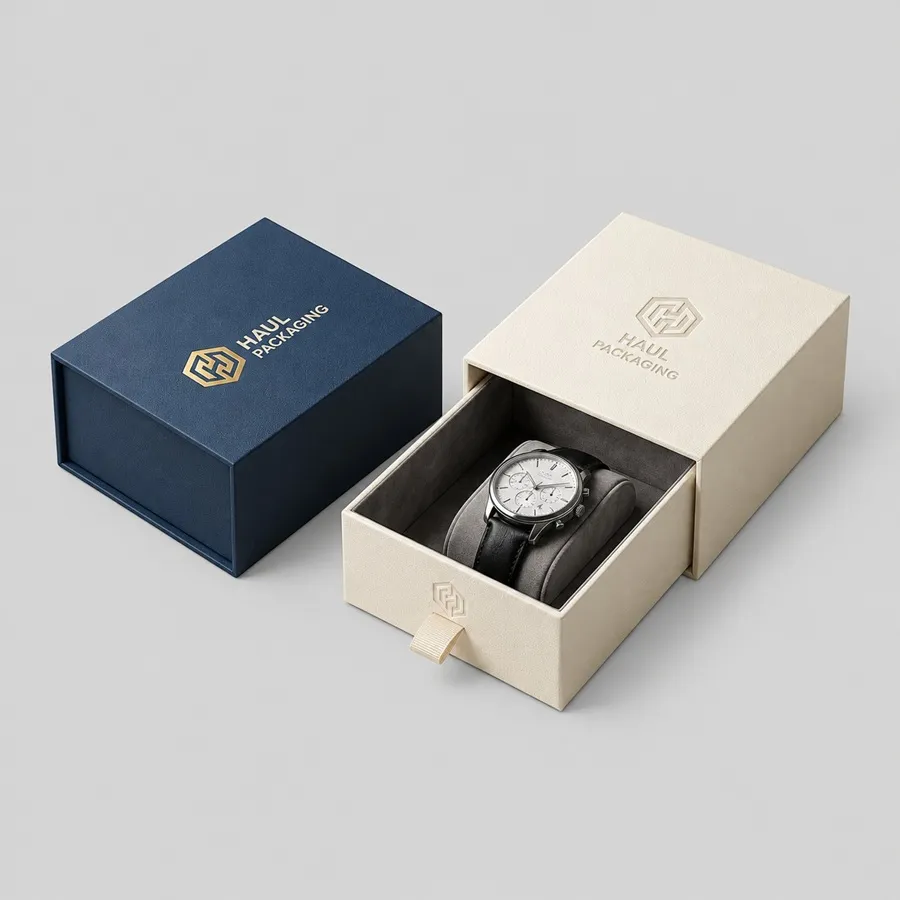
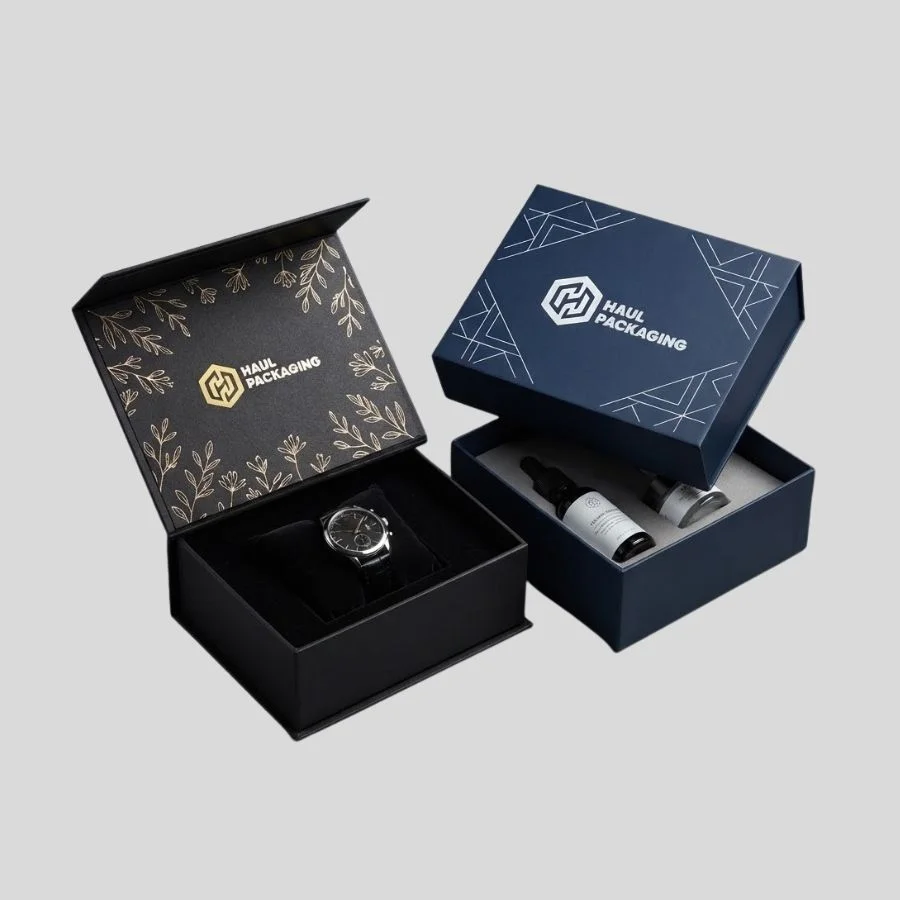
Premium Finishes
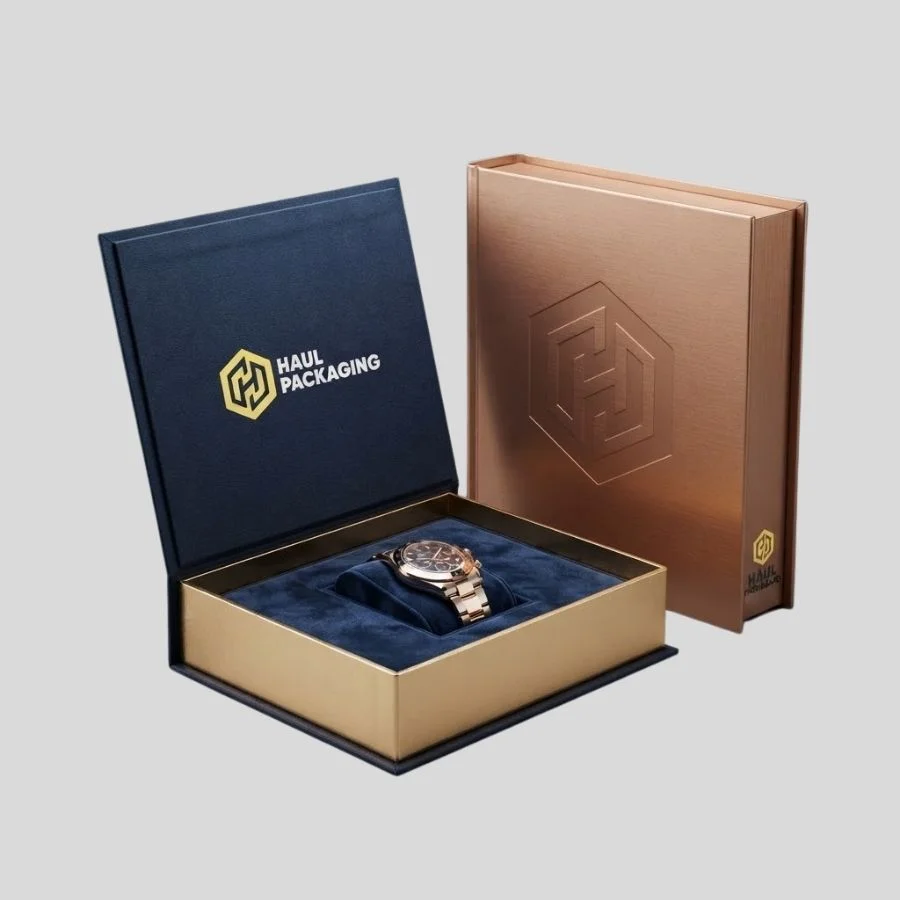
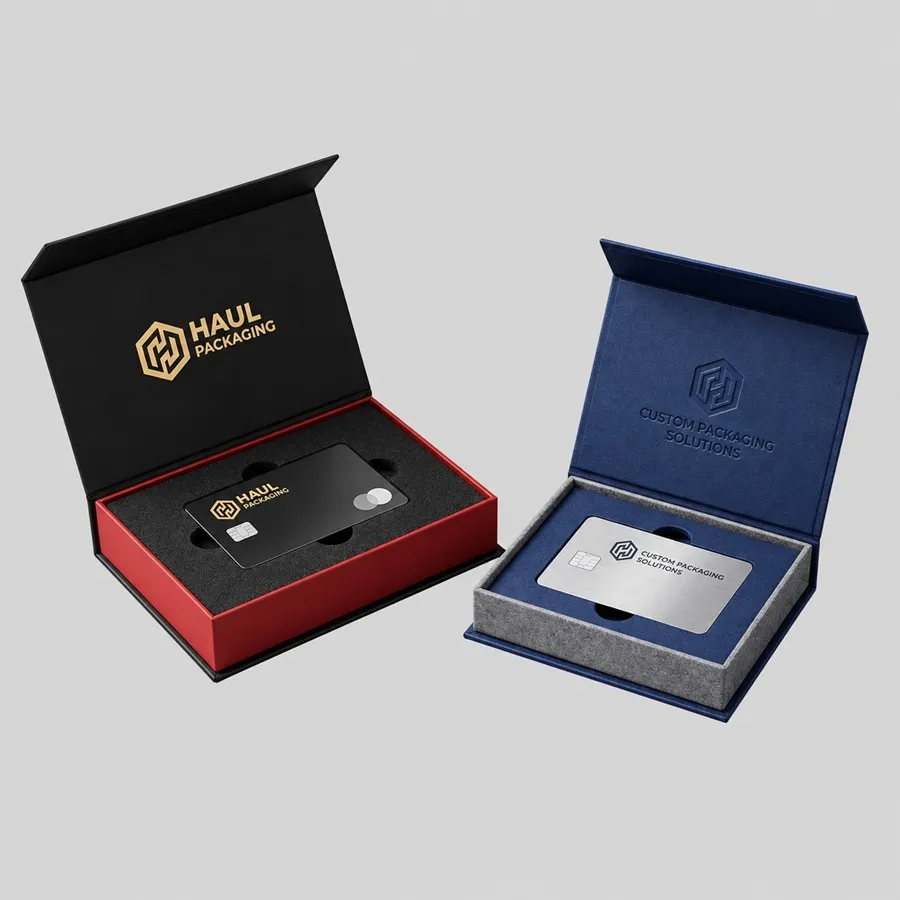
Haul Packaging provides a range of high-quality finishings, including as foil stamping, glossy or matte coatings, embossing, and soft-touch finishes, to improve the visual attractiveness of packaging. These finishes have the power to increase a product's perceived worth and make it stand out on retail shelves.
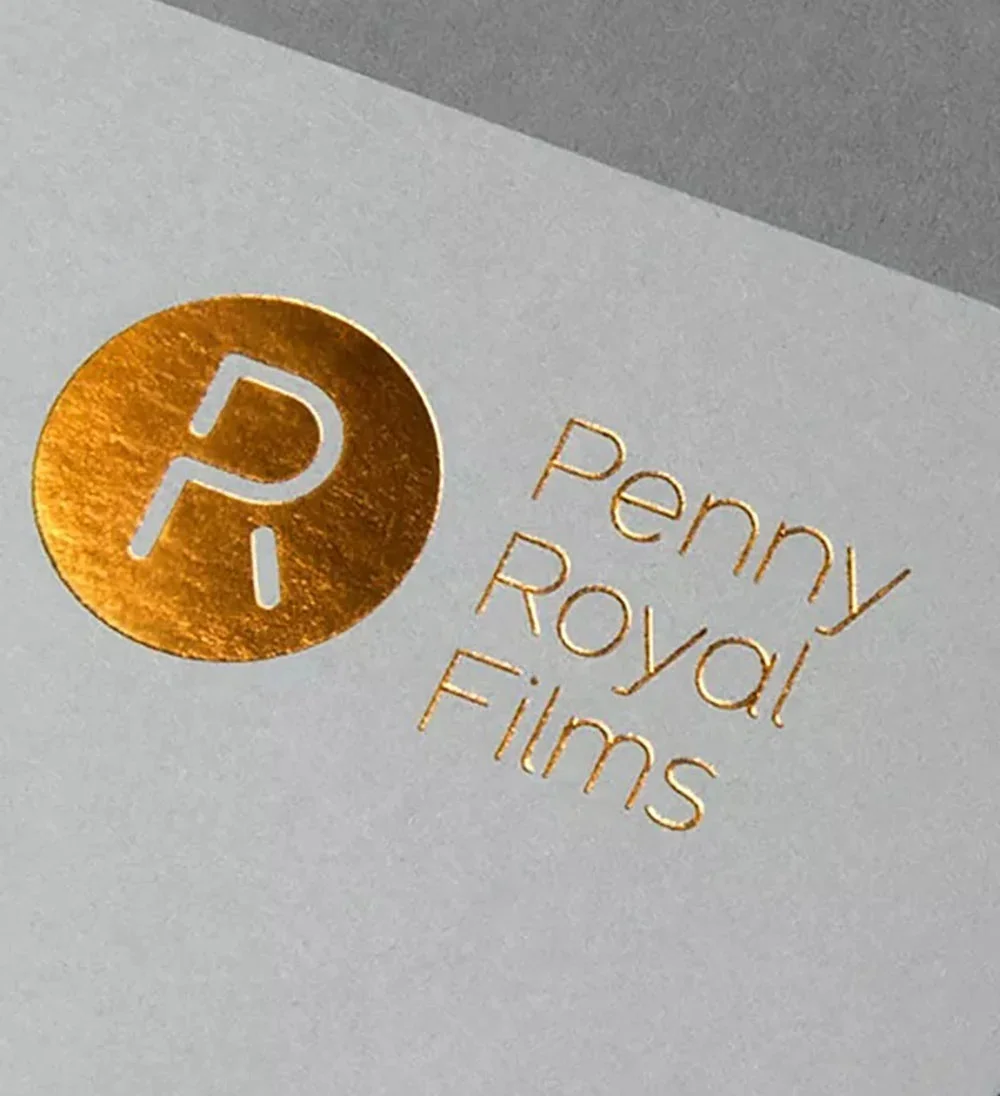
Copper Foiling
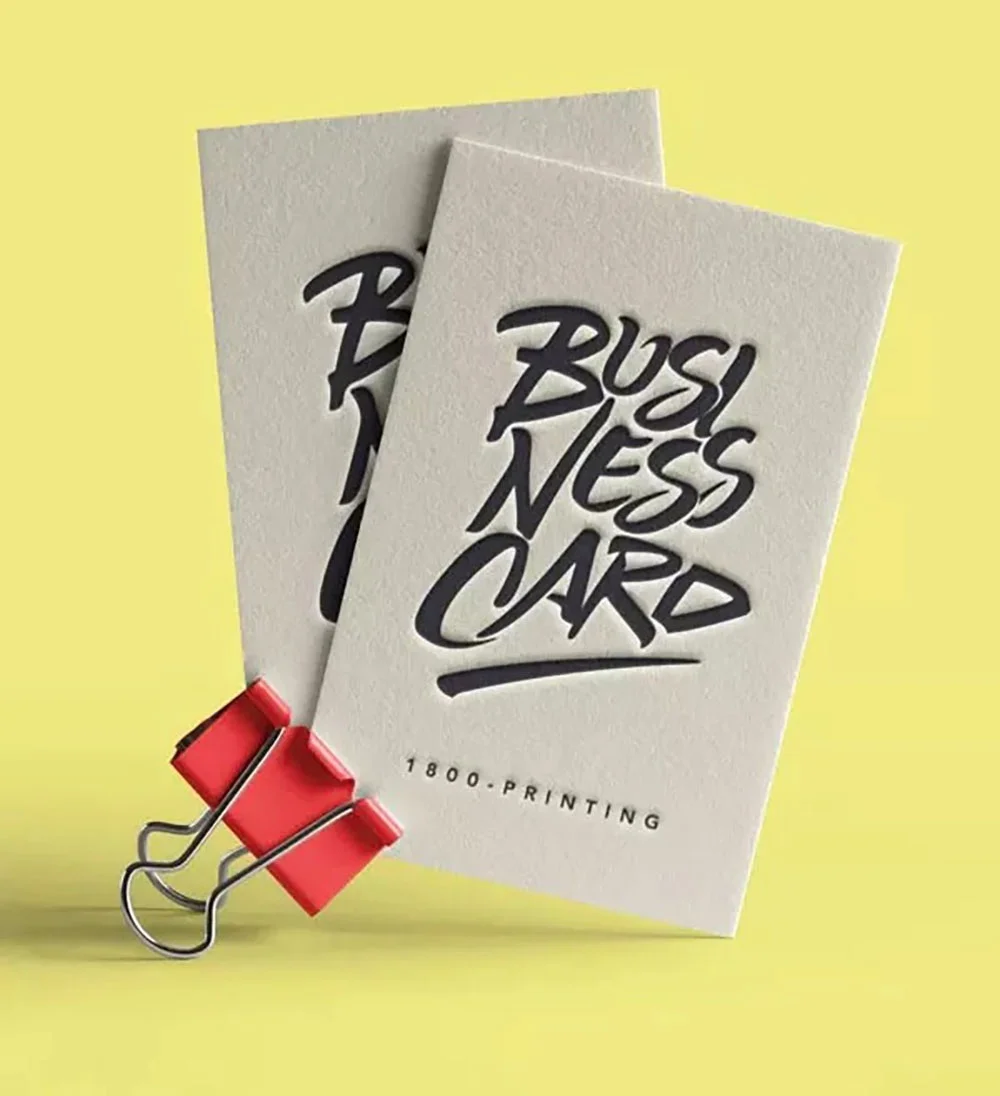
Debossing
Embossing
Holographics foiling
Rose Gold
Silver Foiling
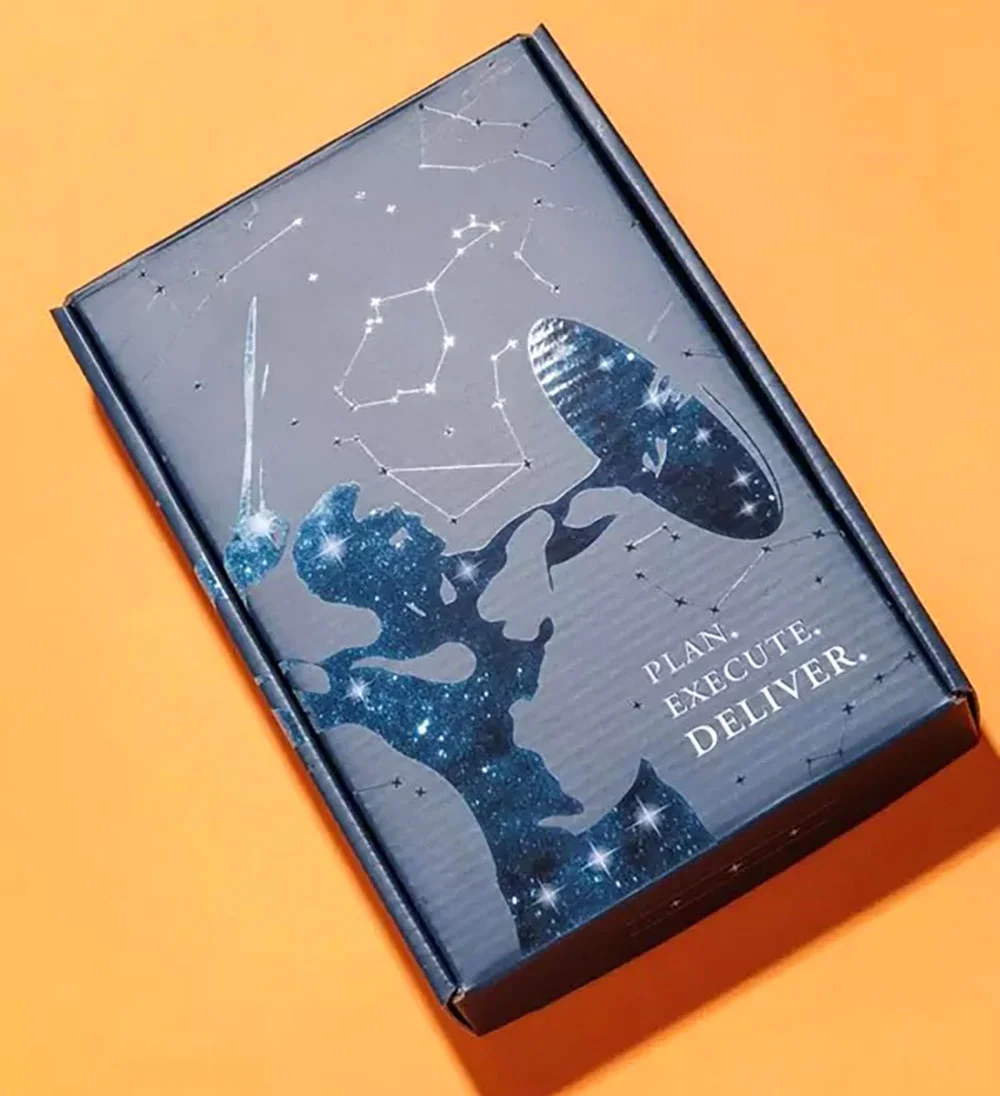
Spot UV
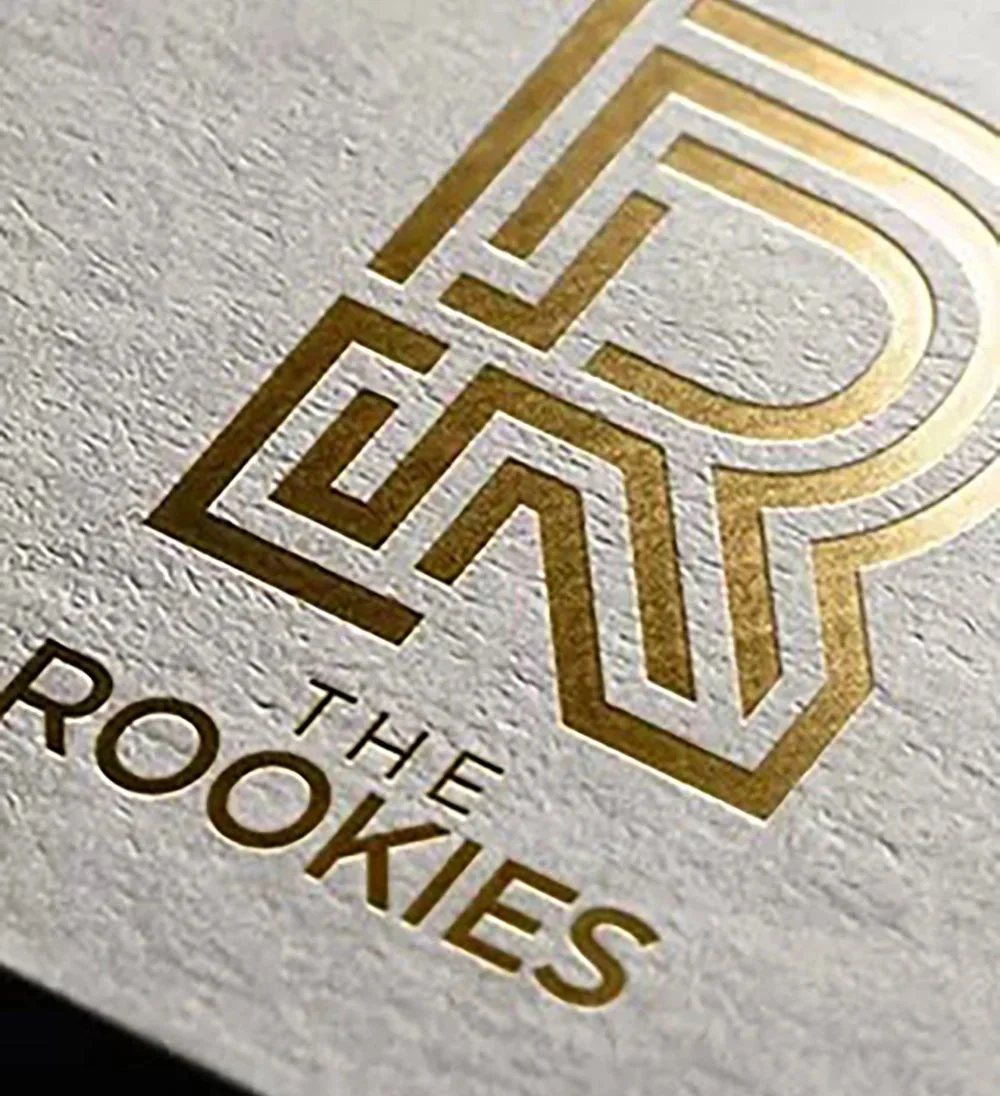
The Rookies
Card Stock Options
Haul Packaging provides a large selection of card stock types to meet various needs for packaging. You may give your box an adorning appearance and feel by selecting from a range of cardstocks with varying thicknesses, textures, and colors. The card stock selections for Haul Packaging are of excellent quality and longevity, guaranteeing that the packaging not only looks fantastic but also protects the contents within.
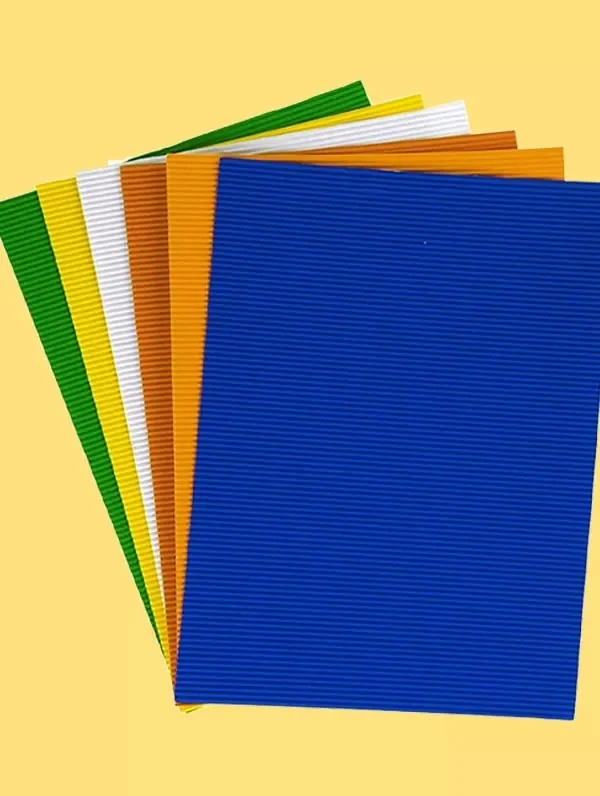
Corrugated
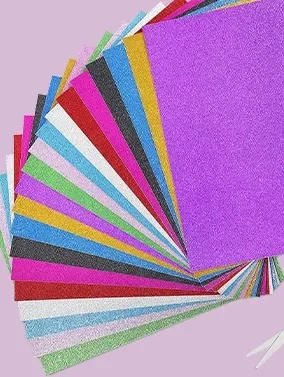
Glitter
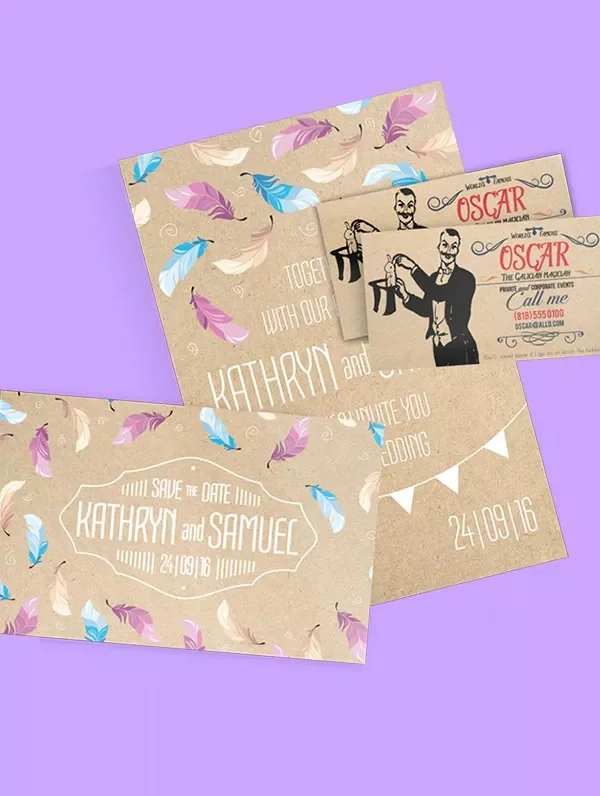
Kraft
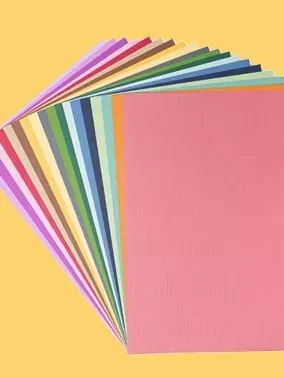
Matte
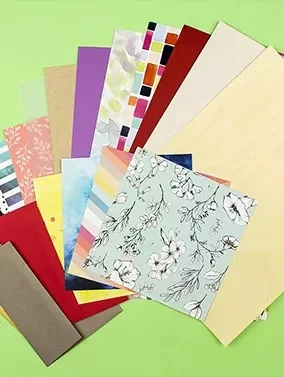
Textured